


Hey there, I’m Alberto! 👋 Each week, I publish long-form AI analysis covering culture, philosophy, and business for The Algorithmic Bridge. Paid subscribers also get Monday news commentary and Friday how-to guides. I publish occasional extra articles. If you’d like to become a paid subscriber, here’s a button for that:

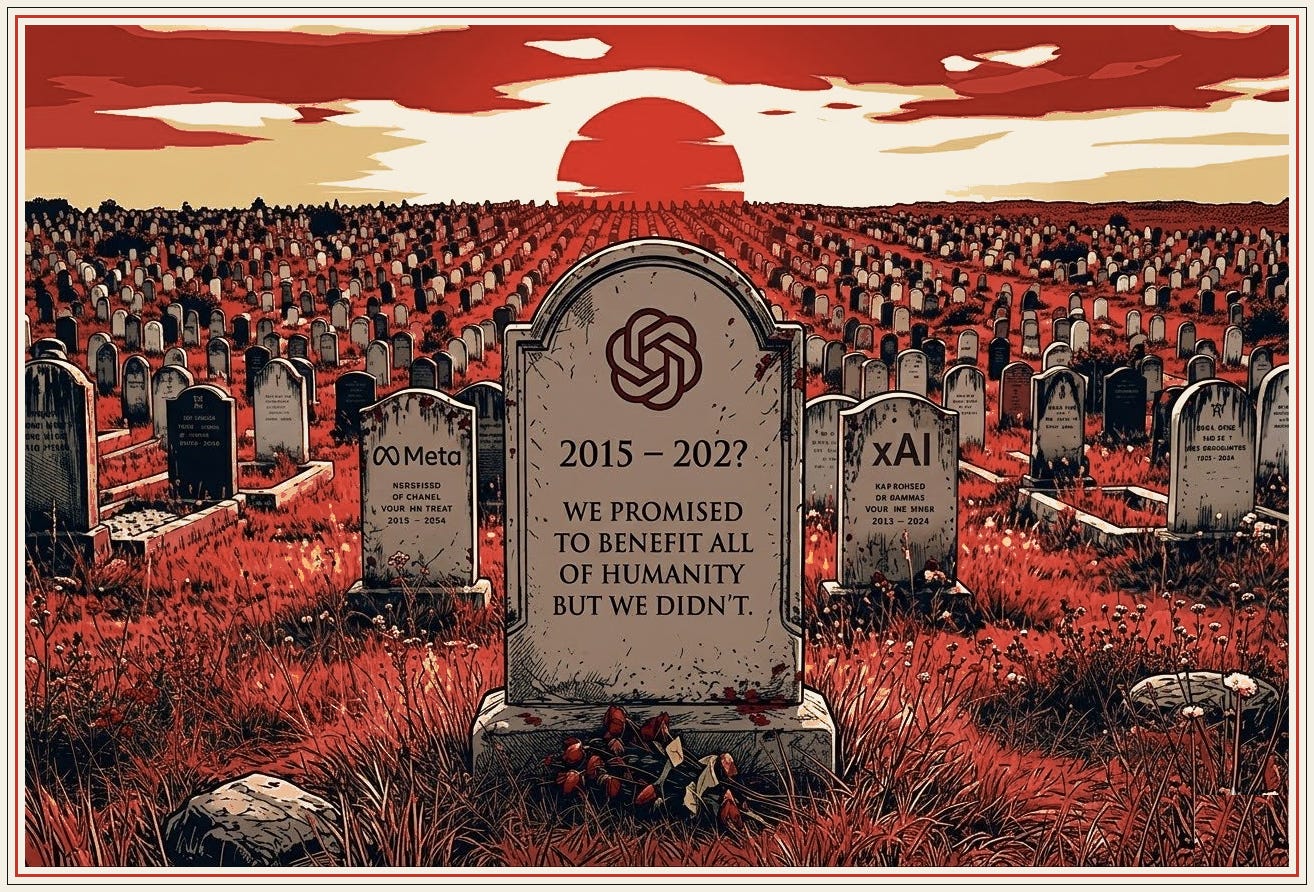
Nobody kills a company. Companies die the way Hemingway said people go bankrupt: gradually, then suddenly. What follows is the sudden part. Only facts.
THE DEAL
THE MARKET
THE PATRON
THE CENTER
THE PIVOT
THE TRIAL
THE BLEED
THE ENGINE
THE WAR
THE BUBBLE

I. THE DEAL
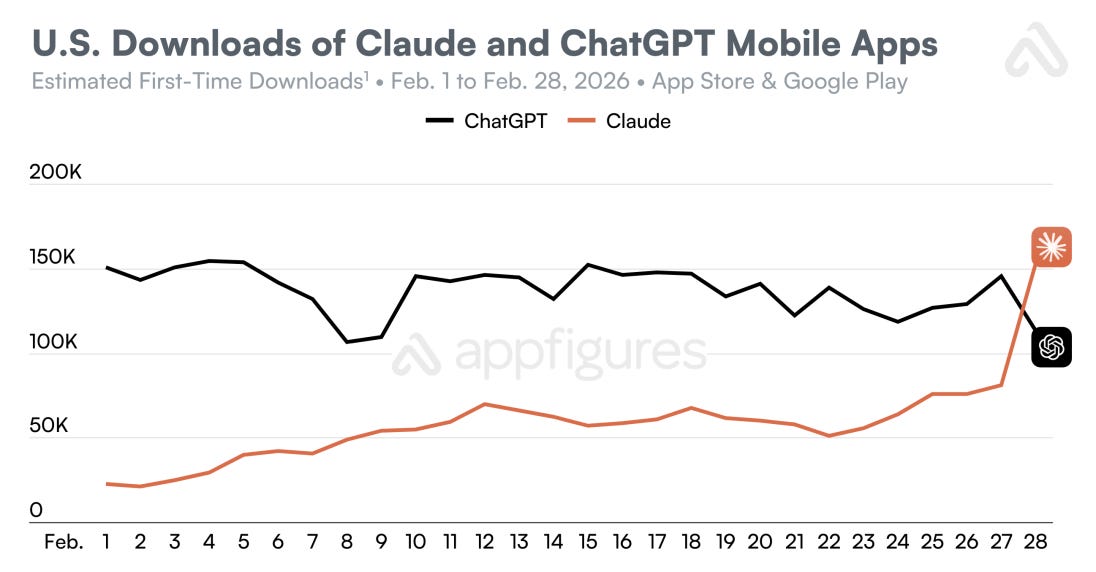
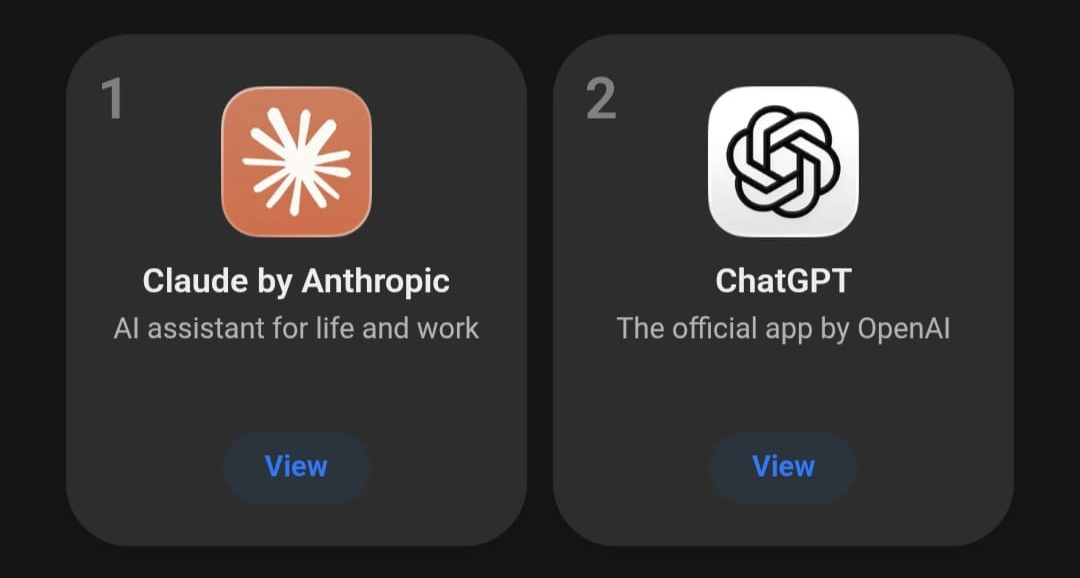
In February, Anthropic’s CEO said he could not “in good conscience” give the DoD unrestricted access to his AI systems. Within hours, the Trump administration labeled Anthropic a supply-chain risk. Within hours of that, Sam Altman signed the deal. He later admitted it “looked opportunistic and sloppy,” but he was 1) dishonest and 2) too late. ChatGPT uninstalls spiked 295% that day. A boycott called QuitGPT gathered 2.5 million participants in a week (4 million at the time of writing). Claude became the most downloaded free app on the US App Store. OpenAI’s robotics chief resigned publicly. Hundreds of employees signed an open letter supporting Anthropic’s position. The sidewalk outside OpenAI’s SF offices was covered in graffiti: “you suck.” This movement against OpenAI won’t kill ChatGPT’s lead, but it’ll deteriorate its image beyond repair; the market might not care about morals, but it does care about optics.
II. THE MARKET
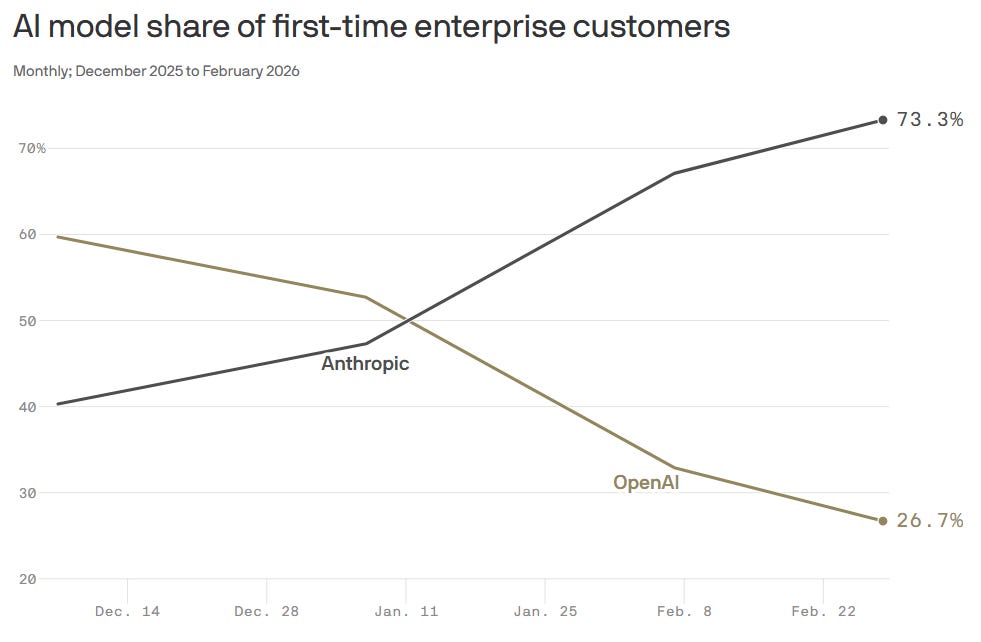
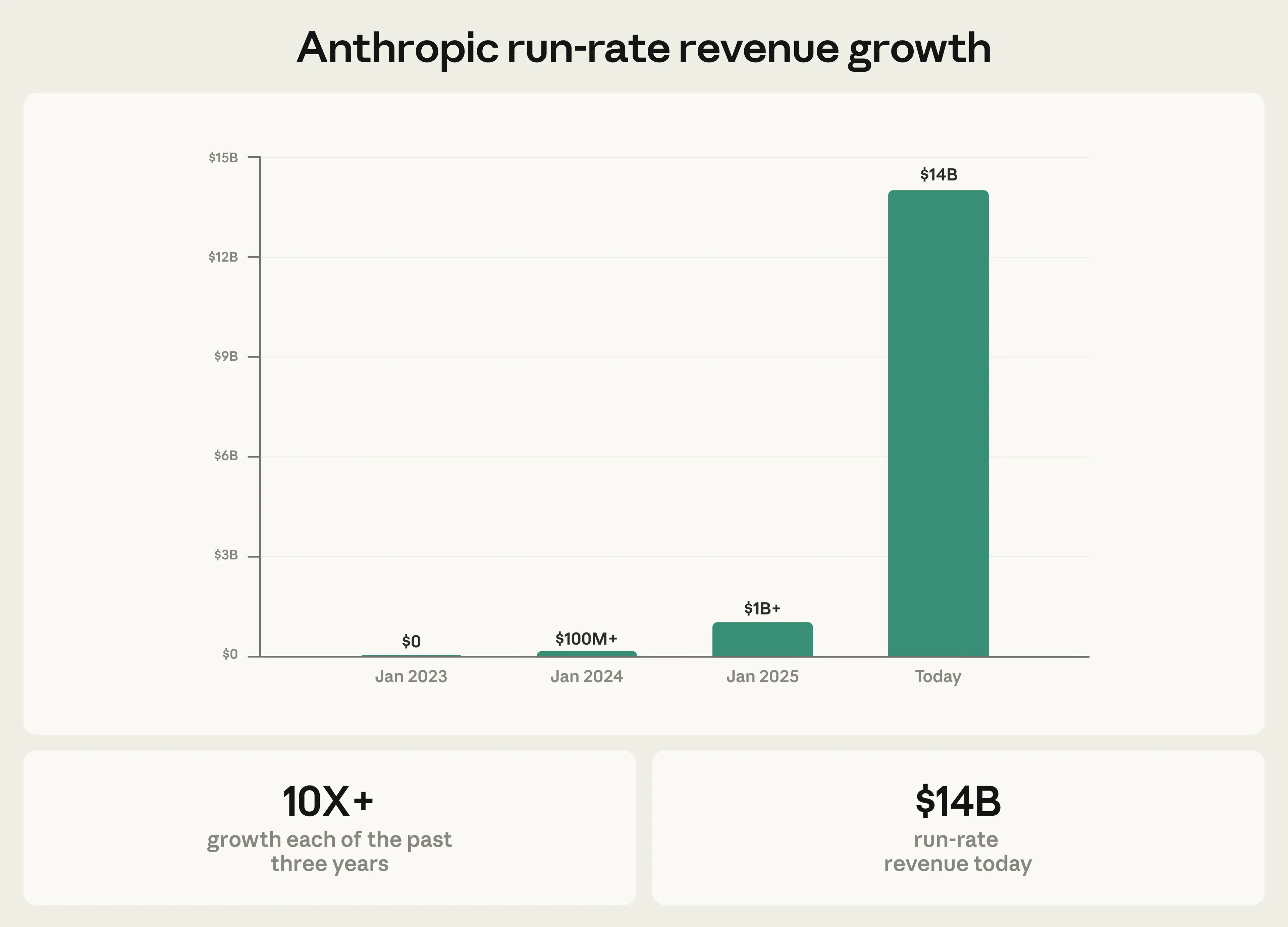
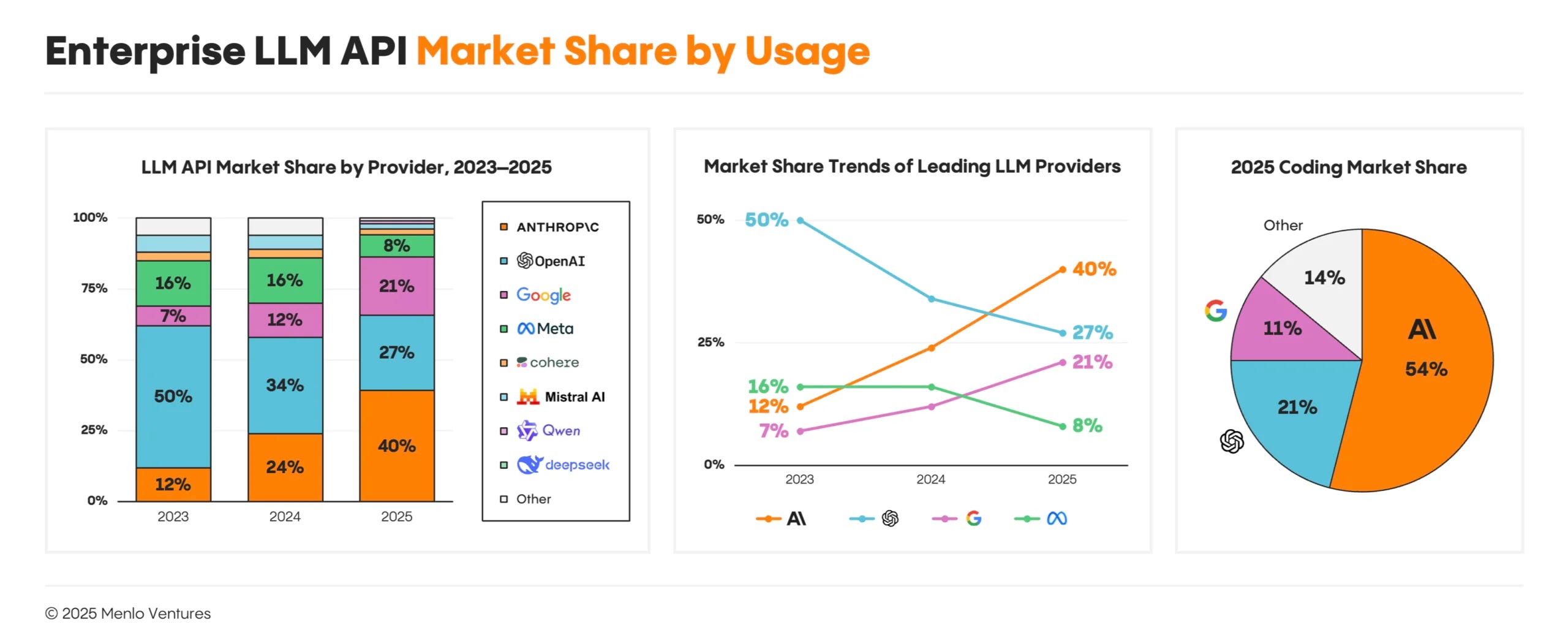
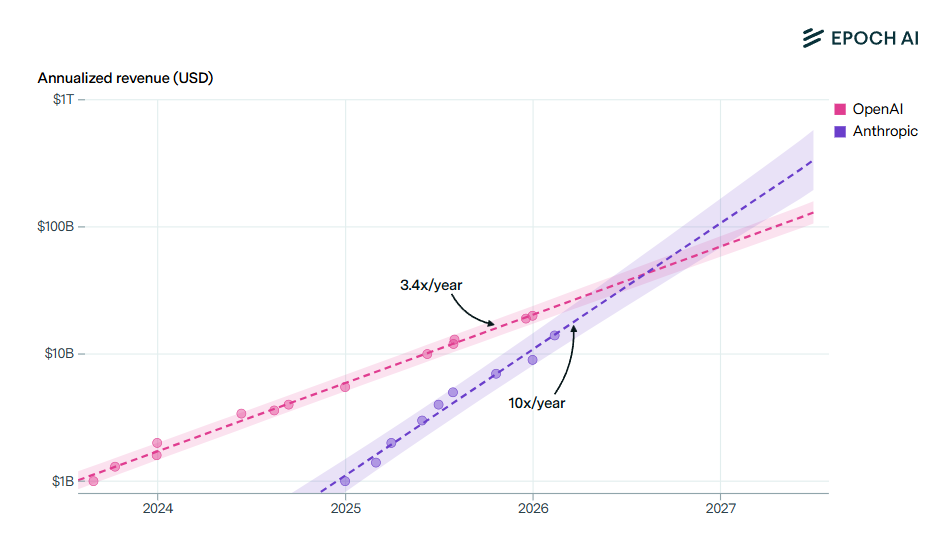
As a direct result of OpenAI’s deal, plus the great quality of the products, Anthropic’s run-rate revenue hit $19 billion in March, more than doubling in two months, from $9 billion at the end of January and $5 billion in August 2025. OpenAI topped $25 billion in March—still ahead—but the trajectory looks like a plateau compared to Anthropic’s exponential. Anthropic now captures 73% of all spending among companies buying AI tools for the first time. Ten weeks ago, that split was 50/50. In the enterprise market, Anthropic holds 40%, whereas OpenAI has fallen to 27%. In coding, Anthropic is at 54%; OpenAI is at 21%. Claude Code generates over $2.5 billion in annualized revenue; OpenAI’s Codex produces just over $1 billion. OpenAI destroys everyone in the consumer side of generative AI apps, but enterprises don’t seem to trust OpenAI to do business with. These figures are more impressive given that OpenAI has 50x as many active users as Anthropic.
III. THE PATRON
There was one who trusted Altman early on. By the end of 2024, Microsoft had invested $13 billion in OpenAI. It owns 27% of the company. Until 2032, it will get 20% of revenue and exclusive rights to route all access to OpenAI’s stateless models (no memory between sessions) through Azure. Last month, OpenAI signed a $50 billion deal with Amazon as part of a multi-deal that included Microsoft. That would make AWS the exclusive third-party cloud provider for Frontier, its new enterprise agent platform, equipped with a stateful API. Microsoft first considered walking away from the deal over an “AGI clause” that would have slashed its existing contract, and has now threatened to sue OpenAI. “We know our contract,” a person familiar with Microsoft’s position told the Financial Times. “We will sue them if they breach it.” To compete with Anthropic in enterprise, OpenAI needs Amazon’s distribution. To keep its infrastructure funded, OpenAI needs Azure credits. These two needs are, barring a thin semantic lifeline, mutually exclusive.
IV. THE GRID
OpenAI would need neither if it built its own datacenter; alas, it won’t. In January 2025, Trump stood in the White House alongside Altman, Masayoshi Son, and Larry Ellison to announce Stargate, a $500 billion AI data center initiative. They promised to spend $100 billion immediately. More than a year later, the Stargate joint venture is over: there’s no staff, it is not developing any datacenters, and the partners have spent months arguing over who would control what without consensus. OpenAI missed its target of 10 GW of capacity by the end of 2025. It then tried to build its own data centers but couldn’t get financing; lenders wouldn’t back billion-dollar infrastructure projects from a company that has never turned a profit.
V. THE PIVOT
If you are short on compute, you should not be playing every vertical. OpenAI spent 2025 announcing Sora, a video generator, Atlas, a web browser, a new device, and e-commerce features for ChatGPT. Altman compared this to “betting on a series of startups.” I called it “risky over-diversification.” In March 2026, OpenAI’s CEO of applications, Fidji Simo, told staff they were in “code red.” (A second at that.) She described Anthropic’s enterprise gains as “a wake-up call” and cancelled all “side quests.” Current and former employees described a period of strategic confusion: mixed teams, unstable compute allocation, a cascade of restructuring decisions... Does this focus on the enterprise mean they’re so desperate to catch up to Anthropic that they’re leaving consumer AI to Google (and, to some degree, Meta)? Is this how a “near-AGI” company behaves, by doing a full 180 turn amid a multipolar crisis?
VI. THE TRIAL
OpenAI seems to be adding enemies faster than customers. Elon Musk is suing OpenAI and Microsoft for up to $134 billion. The trial starts in late April 2026. Musk argues he gave $38 million in seed funding—60% of OpenAI’s early capital—and received nothing when the company restructured into a for-profit. In January, a federal judge rejected OpenAI and Microsoft’s final attempt to dismiss the case, pointing to internal communications from 2017 in which co-founder Greg Brockman privately wrote that he “cannot say that we are committed to the non-profit.” If a jury finds that Altman’s team knowingly misled donors, the company could be ordered to pay billions it does not have, in the middle of a cash crisis, on the eve of an IPO that is supposed to solve the cash crisis. Even if OpenAI wins, the reputational damage of saying one thing and doing the opposite may never fade away.
VII. THE BLEED
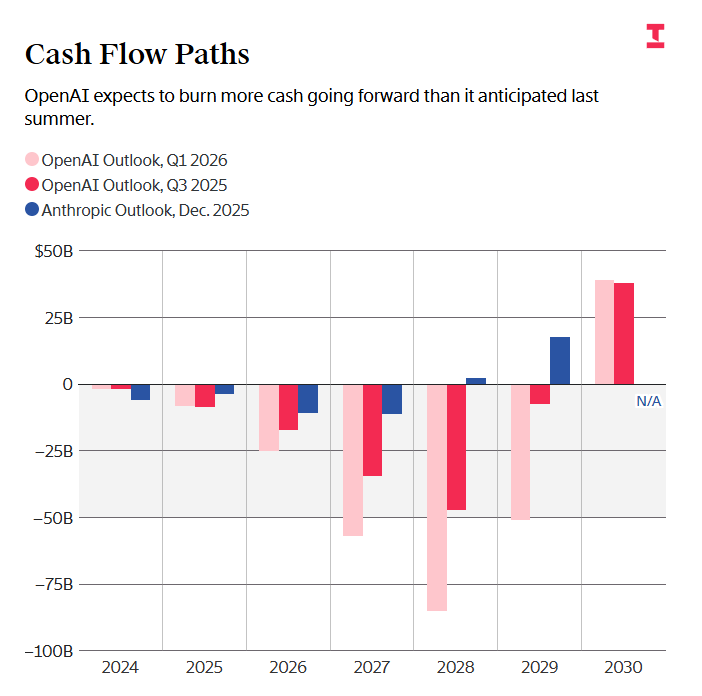
An economist at the Council on Foreign Relations estimates it could run out of cash by mid-2027. OpenAI is projected to lose $14 billion in 2026, and it expects to burn $111 billion more cash through 2030 than previously forecast. Inference costs quadrupled in 2025. Gross margins fell to 33%, down from 40% the year before. They won’t be cash flow positive until 2030. Ninety-five percent of ChatGPT’s 900 million users don’t pay. In late 2025, OpenAI introduced ads into ChatGPT, which Altman had previously called “a last resort” because they had no other option, but it won’t be enough. The plan to survive is an IPO targeting a valuation of around $1 trillion. But the IPO needs a stable partnership with Microsoft, a resolved legal situation with Musk, a coherent enterprise story, and a market that assumes a temporary burn rate. That’s 0/4. Markets forgive losses. They forgive lawsuits. They forgive missteps. But they don’t forgive all of those things at the same time, from the same company.
VIII. THE ENGINE
The reason OpenAI may die before turning a profit is that the premise on which the empire is being built is flawed. In March, Altman told a room of Stanford students that he bets there’s a new architecture waiting to be found, one that will surpass the transformer the way the transformer surpassed LSTMs. The entire generative AI empire is built on another bet: that transformers are the road to AGI. If they are not it because something else is needed, then what’s this empire worth? You can play the markets with words, also your clients and your partners. You may even be able to play God and its servants. But you will never ever be able to persuade the laws of physics. When the transformer gives up despite all the efficiency gains achieved by tinkering with the algorithms and scaffolding the models with reinforcement data, the next Eureka moment might not be waiting for them.
IX. THE WAR
In February, the US and Israel launched military strikes against Iran. Iranian retaliatory attacks hit three AWS data centers in the UAE and Bahrain. The first military strikes on US hyperscaler infrastructure in history. The Strait of Hormuz closed. Twenty percent of the world’s oil transits through that strait. Qatar, which produces over a third of the world’s helium—essential for chip manufacturing—is in missile range. Tech companies had poured billions into Middle East data centers drawn by cheap energy; those investments are now in danger. Every AI company is exposed, but OpenAI is more exposed than any other because its compute needs are massive and it has hundreds of millions of users across the globe who all need to be served. The US might win the war, but OpenAI has already lost it.
X. THE BUBBLE
Tech people have a bad tendency to factor out the inertias of the real world. The war is a big one (supply chain, funding, etc.), but even without that, you have a long list of problems. First, a majority of US adults are concerned about AI; a significant fraction outright hates it. It could be a primary political talking point in the next elections; the anti-AI party would win. Then you also have huge spending without profit; bad for business and markets. Then you have stalling infrastructure buildups. Then you have waning funding. Then you have a technical foundation that’s about to meet its limit. The bubble is general, but OpenAI could end up worse than anyone else. They wanted to become “too big to fail” by entrenching themselves within the broader economy, but OpenAI might actually be too big to save. You can’t let an entire industry succumb, but with Anthropic and Google, OpenAI is not that critical a piece.

Let me caveat the title. OpenAI is not dead like a person is dead, but like a marriage is dead. For some time, they will continue to make deals and announcements and partnerships. They will keep running ChatGPT and selling subscriptions and will reach 1 billion users. They might even go into a successful IPO.
But, like a marriage that’s over and everyone knows except the people involved, OpenAI is merely a zombie, walking but not fully alive. This is its obituary.
They made a big bet at the inception, a bet on a technological revolution called AGI. They poured their souls, their money, and our data into it, but even with all that—all the popularity, the growth, the revenue, the religious-like following—they are about to find out that it’s ultimately better to be good than to be first.
"Diworsification" as a famous successful investor would say. Sora the video monster with 5 hands, Monday a cynical bot who stayed for 2 days pinned..
I really like how you write. I am hanging on every word.
Great article! Just one note -- aren't the revenue numbers we have gotten from Anthropic kinda misleading & fishy?