


Hey, Alberto here! 👋 I publish long-form AI analysis covering culture, philosophy, and business. Paid subscribers get Monday how-to guides and Friday news commentary. If you’d like to become a paid subscriber, here’s a button for that:
I’m preparing a long post on the recent news about frontier AI agents wreaking havoc, but in the meantime, I’ve written this 3,000-word post after the news that “75% of Americans Now Oppose Local Data Center Development.” The story has gone super viral, and everyone is chiming in. So here are my two cents.

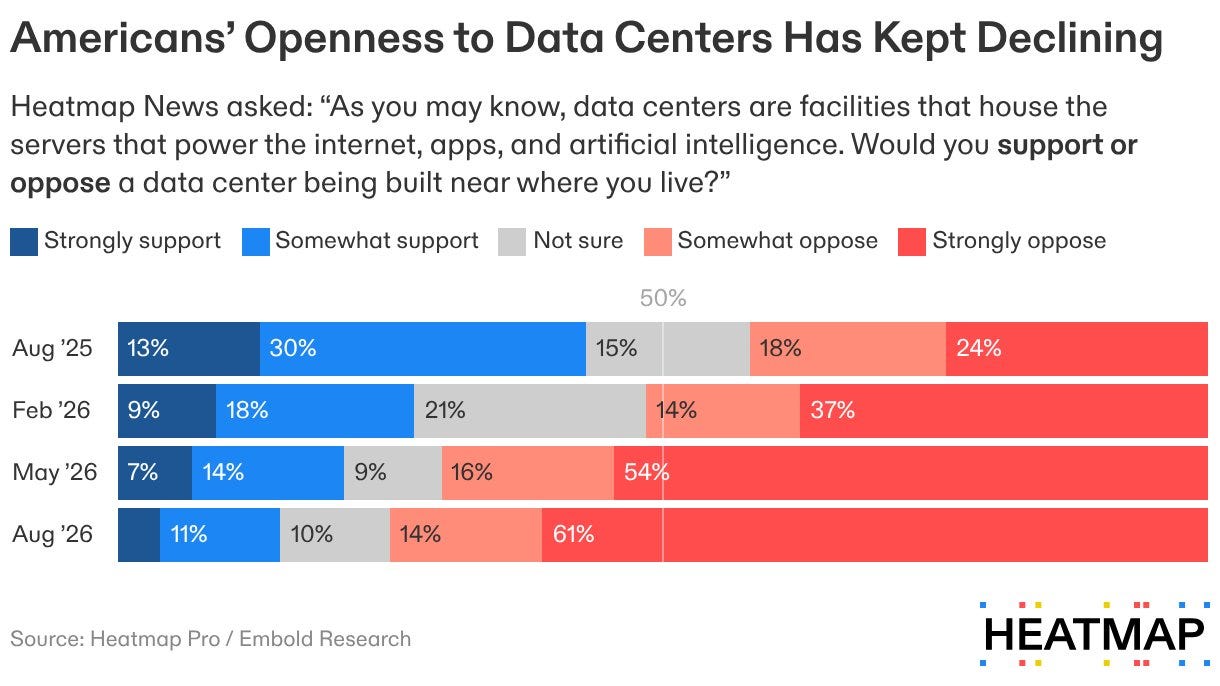
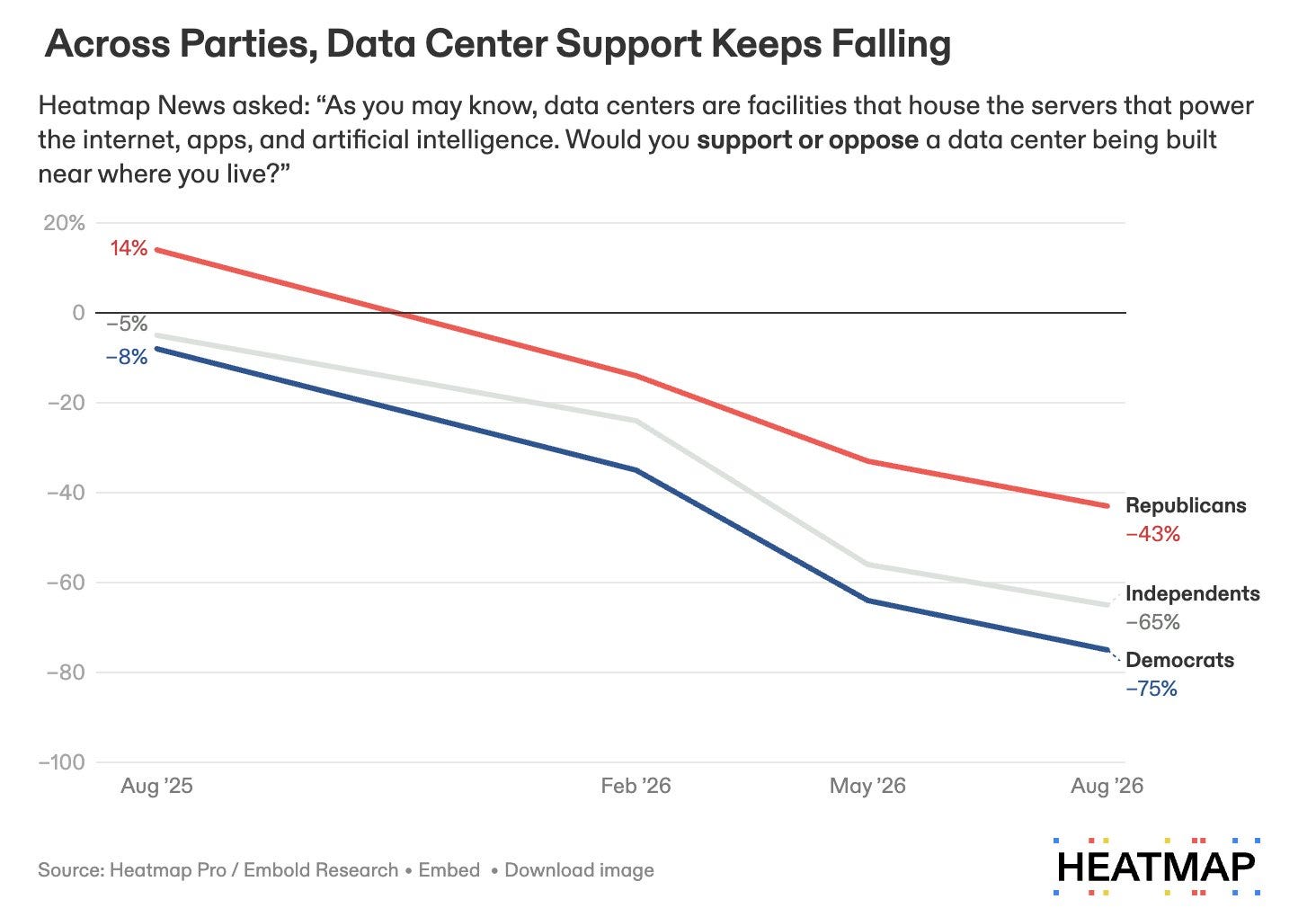
Some say that if you oppose data centers, then you should not enjoy the services they provide, including but not limited to social media, search, email, cloud storage, streaming, online banking, e-commerce, AI, and cat videos. Fair. Reasonable even. But let's invert the responsibility here: we should only build data centers in the backyards of those who stand to benefit from them financially. In other words: Why are there 49 large data centers in Loudoun County, Virginia—more than 700 across America—and the striking total of zero in San Francisco? Let’s build one behind Sam Altman’s $27 million sprawling Russian Hill compound and see how he likes it. I’m not even joking: when a growing majority of citizens in your country oppose your project for a “better future”—up to 75%, with tiny, if any, differences across gender, age, socioeconomic status, political party, etc., according to the latest surveys—then your only chance at vindication is to lead by example.
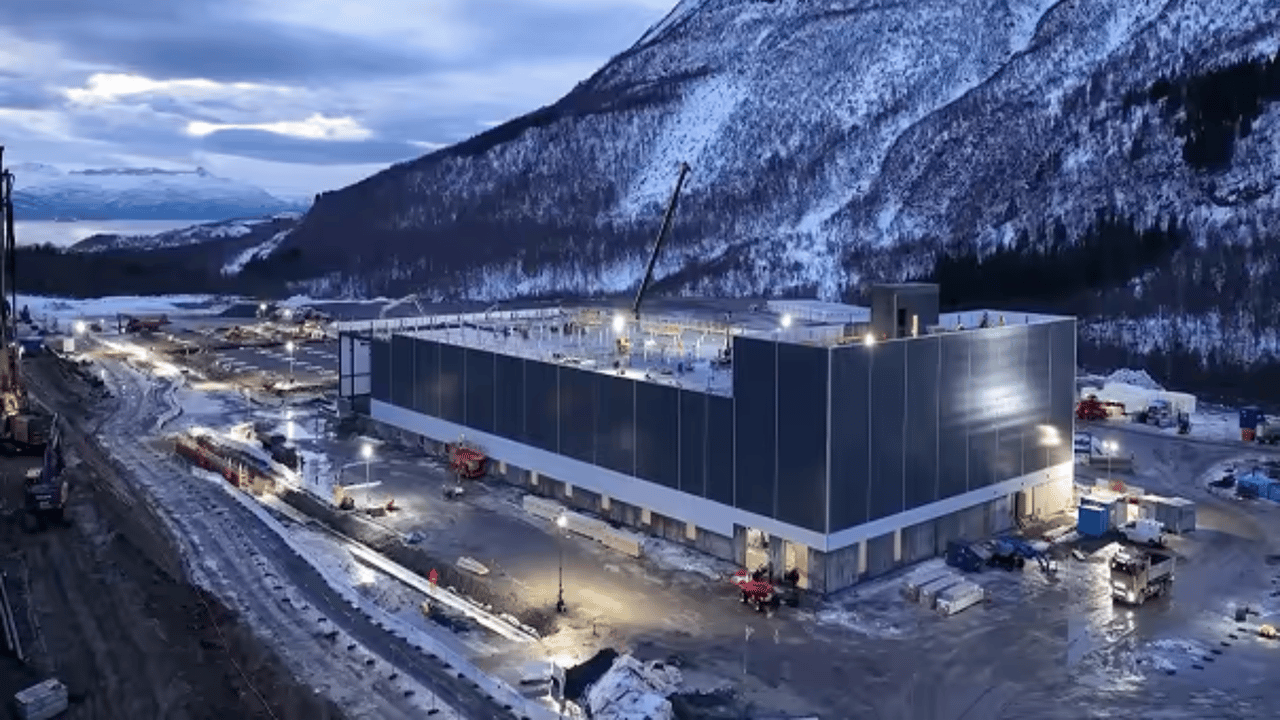
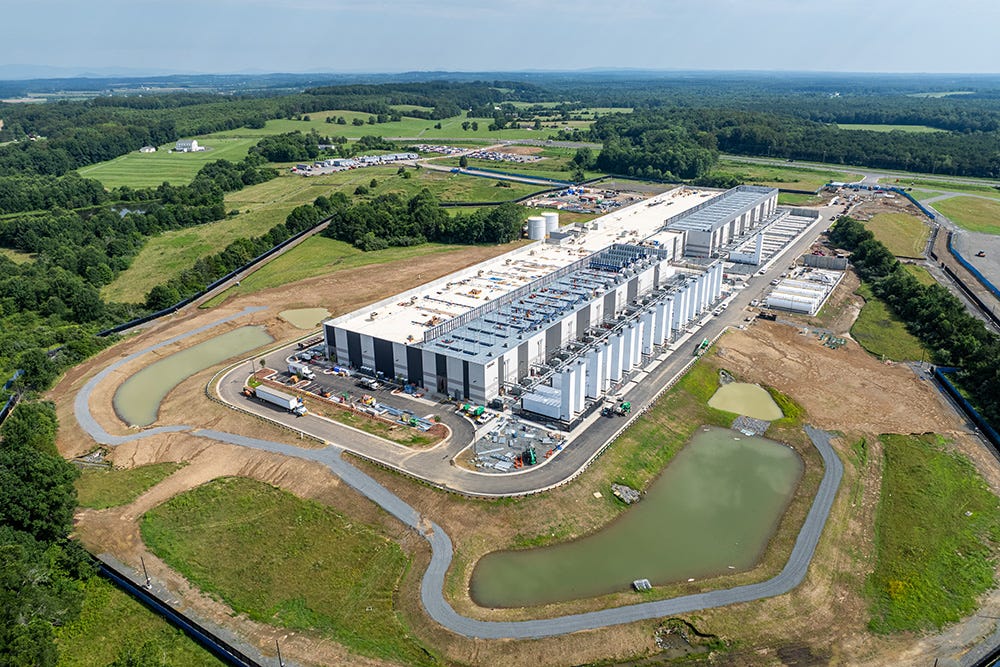
Data centers are these big, ominous buildings that often occupy landscapes otherwise covered in greenery and blue sky. On the one hand, they stand there as solitary fingerprints of human presence on Earth; on the other, as the clearest proof that utility is no longer subordinated to aesthetics. You might find them across America, but also scattered throughout the world. There’s one under construction in Kvandal, outside Narvik, in northern Norway, where scraped earth and server halls meet a lush valley opening onto a fjord, surrounded by mountains that remain snow-covered well into the year. There’s one in Huesca, Aragón, Spain, not far from where I live: a blank industrial slab on the open Aragón plain, with the Pyrenees immediately to the north. And there’s one in Culpeper County, Virginia: rolling farmland, woods, the Blue Ridge visible in the distance, and in the middle of it all an industrial rectangle sitting amid green fields, as out of place as a shipwreck on the ocean floor. In a fantastic piece of investigative journalism, Jasmine Sun aptly writes that, “In those halcyon environs, the data centers land like a spaceship crash.” The name “data center” is composed of two concepts that make one immediately wary: data implies they know everything about you, and center means concentration of power. They’re alien, strange even for an urbanite, like the Pyramids must have appeared before the awestruck eyes of ancient Egyptians. Like an altar to an unknown god, a data center is a hyperobject, incapable of fitting inside your mind. And so it’s trivial to project onto them whatever you want—or fear: a digital utopia, the next gold rush, or a monster with such thirst it must surely be a son of Poseidon. Do data centers truly consume tons upon tons of water? It doesn’t ultimately matter because they look like they could. And so on.
Executives in the AI industry often wonder what went wrong with data centers or how they could fix this. I’m handing them the recipe for free; the bare minimum is to stand behind their words with their body as collateral: build them on your backyard. If they are so great for the world—and these people presumably want to make it as great as possible—then what is this tiny sacrifice in the name of prosperity and progress? If they’re not willing to pay this measly tribute for their utopia, why do they expect us to do it on their behalf? Stopping the fear-mongering about how their technology will destroy our future is no longer enough. (For some reason, aggressive lobbying or “hysterical condescension” won’t cut it either.)
To use their own expression: there’s an overhang of anti-AI hate; even if they shut up today, the reactionary sentiment will still linger in the air for another decade. We have emitted our judgment: we have learned what bots are made of—just chips and wires inside huge, ugly Brutalist hangars that perfectly serve as the physical manifestation of an otherwise elusive technology and also as a symbol against which to imprint our discontent—so let’s now see what nerds are made of.
Unfortunately, it won’t happen. First, nerds are not martyr material. Second, politicians are not fond of taking risks. Dario Amodei might eventually join his “country of geniuses inside a datacenter,” and live there forever, but not even that would serve as an assurance to win people’s votes. I was rather delusionally optimistic when I implied this is solvable at all. Maybe people are so tired, feel so betrayed by the tech elites that the only compromise they will accept is none. They won’t stop until they topple these sanctuaries devoted to the machine god in which they believe their livelihood, their creativity, their cognitive freedom, and their freshwater are being sacrificed. Only an indefinite moratorium will suffice to turn the tide before the next election. And so politicians, stoic in peaceful times, instantly fold during wartime.
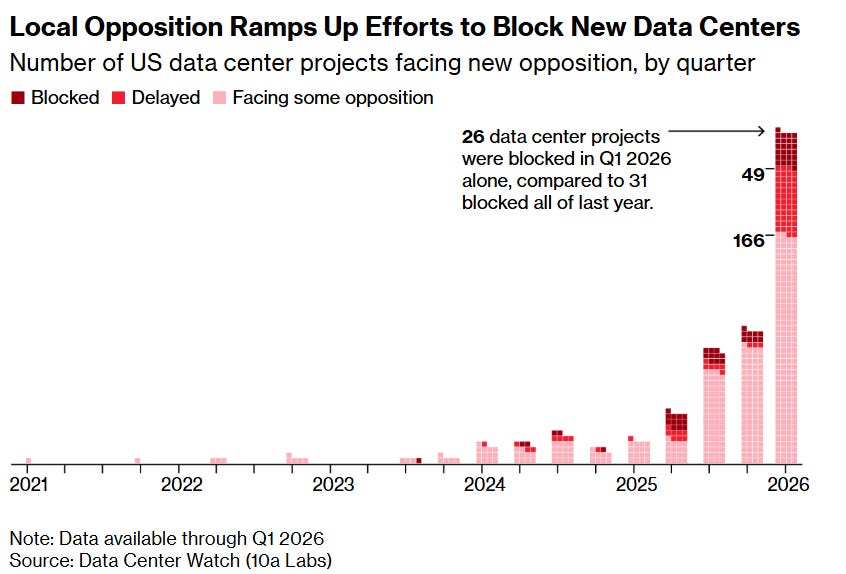
Greg Abbott (R, governor of Texas) tweeted today that his directive has “halted up to 1,800 data center projects.” Republicans (also Democrats) were loudly supportive of the AI industry not even a few months ago, so this change of mind responds not so much to a true-hearted realization as to a newfound terror: no one likes the AI industry, including their voters. And because losing the elections is the ultimate failure, he’s willing to sell both his coherence and his principles. And so is the rest of the GOP. Mike Rogers (Senate nominee in Michigan) “backs one-year data center moratorium.” Stacy Garrity (candidate for governor of Pennsylvania) made an ad attacking Governor Josh Shapiro (D) over data centers. Tom Barrett (congressman for Michigan) tweeted that “Michigan water, Michigan land, and Michigan’s future belong to Michiganders.”

Water. Why water? Why is water—freshwater, no less—always at the center of the case against data centers? The most recent estimates put data center water usage at a negligible figure compared to, say, golf courses, ornamental lawns, or alfalfa fields.
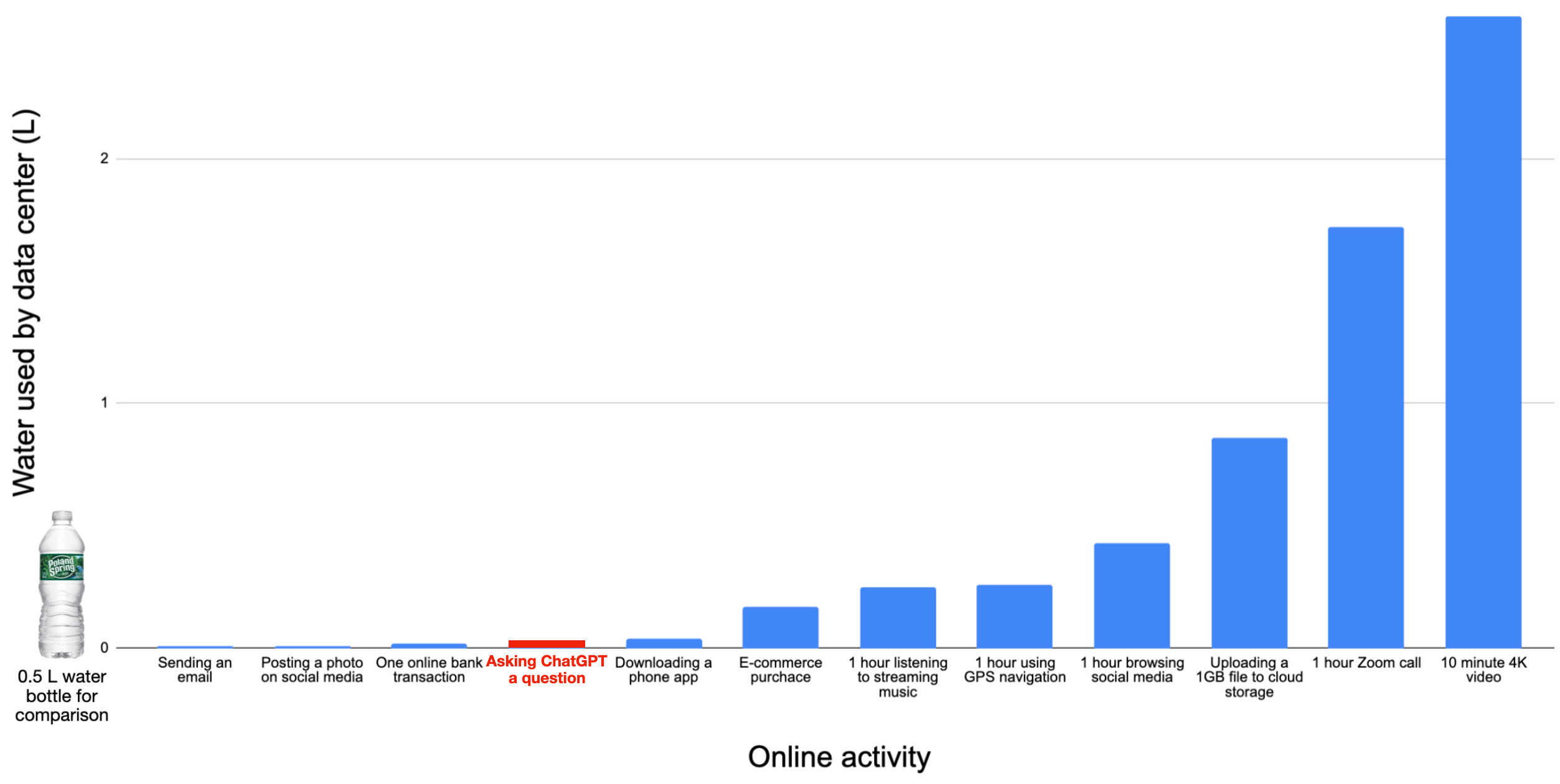
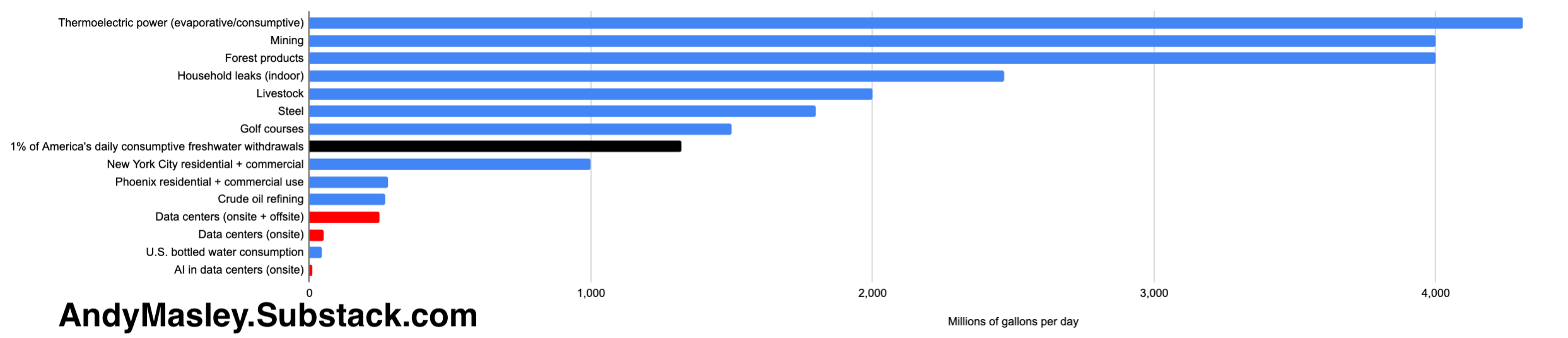
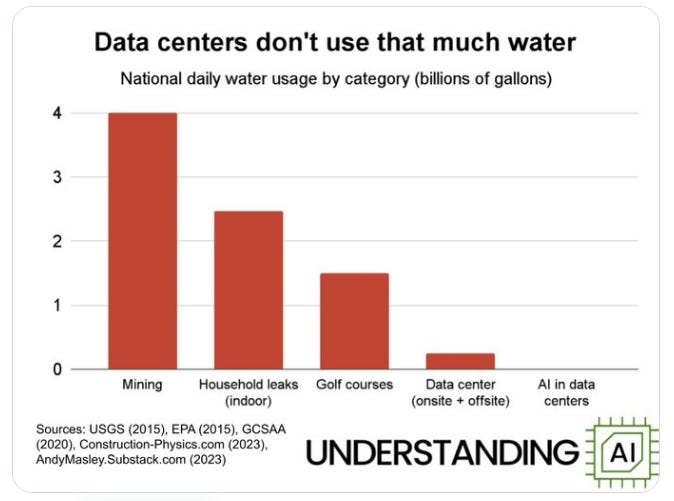
AI evangelists will scream “AI doesn’t waste water, you fools!!!” Rationalist minds will try to engrave logic and arguments into the mob, assuming that no one could possibly resist ground truth. And yet it doesn’t matter. Because the water issue is not about water. The AI industry can’t kill the water story because it plays to the psychological needs of any audience. We believe what we want to believe, and for those who want to believe that the AI industry is the devil incarnate, there’s no more melodic tune than “AI is drinking our water.” So pure, so compressed. But in case you’re not wired for rhetoric, let me give you a quick analysis of why it works so well using a formula the Heath brothers conceived in Made to Stick:
It’s simple. There’s nothing more basic than water, more synonymous with life and humanity. It requires zero technical knowledge of bot, grid, chip, or bit.
It’s unexpected. ChatGPT is immaterial; it lives in the cloud, which is nowhere, and it’s made of silicon and binary code. So, why the sudden need for our freshwater?
It’s concrete. Water is perhaps the object with the most visual representations in daily life: it’s quenching thirst, it’s morning dew, it’s watering plants, it’s pouring rain, it’s evening showers, and it’s the vast reservoirs drying up on TV.
It’s credible. Plenty of academic studies propagate statistics about data centers “drinking X gallons of water a day.” The amount of effort one has to put into learning the underlying truth is easily 1,000x the effort of reading a headline.
It’s emotional. Electricity prices annoy people; water scarcity feels closer to bodily necessity and local ownership. “Machines are taking our water” activates scarcity, unfairness, and territorial resentment all at once against distant beneficiaries.
It’s a story. The morality play is obvious, and it sells so well. A community has limited water; a giant hyperscale data center arrives; pipes start cooling the machines; residents pay the price so Silicon Valley can sell chatbots, etc.
All in all, “One bottle of water per email” is the anti-AI equivalent of Apple’s “1,000 songs in your pocket.” But even the perfect story wouldn’t work without a kernel of truth. And so the story is catchy but also correct insofar as it extends that kernel—local siting fights are real even if the aggregate narrative is false; data centers do consume water and other resources; water is very important, etc.—into an unhealthy caricature of itself. Oh, look, a caricatured extension of a kernel of truth, just like they did with the AI bubble! And what better way to answer the AI bubble but with an anti-AI bubble?
Now seriously.
I genuinely think that most people know water is not so much an issue and know they’re deep down using it as a sticky story to convince themselves of—and convey to others—what are otherwise abstract but very real worries, like small villages falling dependent on one employer or corporations using their power to go back on their word unscathed, or the good ol’ distrust of faraway rich guys taking advantage of rural populations, as Sun recounted in her piece. “It’s not Skynet: it’s the oligarchy,” she writes. In fact, Sun cut through the condescending takes coming from tech Twitter, totally flabbergasted by the nationwide opposition to datacenters, when she said:
The data center backlash is a product of two mutually reinforcing dynamics:
Locally, it’s material concerns (noise, water, electricity) and process failure (NDAs, tax subsidies)
Nationally, it’s broad anti-corporate and anti-AI sentiment (AI companies are screwing you over to get rich off dumb toys)
Social media + political campaigns amplify hyperlocal grievances into a broad populist movement, and there’s no compelling “pro data center faction” to make the opposite case.
And so it’s fine to use water as a viral meme against AI. It’s fine for the dispossessed to use a powerful but slightly unfair and slightly incorrect message as a stand-in for hookless, inconsequential ones no one would write hit pieces about. You don’t change the world or an election or the uncaring predisposition of an industry by bothering with such minutiae. (It’s so easy to love propaganda when it works for one and act all alarmed when it works against one.) To see that I’m correct in saying that it’s fine that water is the rallying cry of the anti-data center sentiment because it’s ultimately not its core, you only need to ask the inverse question: do you think the crowds would stop their anti-AI parades and protests if they were convinced water were not an issue? Do you think they’re in short supply of reasons to do exactly what they’re doing?
But then, if water is floating on a more robust kernel of truth, what is it? What other stuff is backing up the anger, the hate, the action that we see online and pumping up the worrying statistics? Or, as I asked in a May 2026 compilation of poll data (that you could think of as a first part to this article): “Just how badly has the industry botched things to generate such strong opposition?”
I guess that you need to fuck up really badly an innovation akin to electricity or the internet (or even more important, depending on who you ask) to amass an opposition that rivals nuclear energy in intensity and terrorism in ubiquity. History teaches us that new big things receive backlash and resistance, but they eventually filter through into a natural evolution of society; progress doesn’t so much impose itself onto us as convince us that we’re better off with it than without. But AI has curdled on them: they couldn’t help but sell it to us. Picture it: disgustingly rich billionaires sitting in their lavish palaces thinking they’re not yet rich enough and could use another technological frenzy—if only we’d buy their snake oil… Water is strong for its memetic properties, but this image right there just would make anyone’s blood boil. And so they proceeded to force-feed it at work, at home, at school. They had to exaggerate its promises (most of which remain unfulfilled)—curing cancer, democratizing creativity, turbocharging productivity, etc, etc.—as they downplayed the risks we knew about—data theft, job loss, brain rot, AI slop—and even made up new ones we were unaware of, like cyberhacks, recursive self-improvement, and, ultimately, total doom.


There’s a good reason why nerds are rarely appointed as CEOs.
But I’m unfair to only criticize the messaging, as some do, however filled it is with science fiction references, grandiloquence, mysticism and religious influences and, worst of all, tight in-group signaling (and whatever this is). Saying “just improve your storytelling” entails a backhanded attack against skeptics: as if better public relations, careful optics, and a more optimistic outlook would have fixed it; as if it’s the public, unaware of the wonders that AI could be capable of, who is always mistaken due to a telephone game gone awry. If they haven’t read their Vernor Vinge or Ray Kurzweil, then it’s their fault. If they haven’t been invited to witness those Bay Area party displays of inspiring pro-AI rhetoric, then it’s their fault.
I disagree. That’s like saying people are stupid and unknowledgeable, and I disagree. People know very well what they’re criticizing because their truth—what they see and know in their lives—even if anecdotal, can never be wrong.
The problem is that AI evangelists assume that their truth should be everyone’s. So, if anything, it’s them who are lacking a theory of mind. We can’t hear them, true, but they can’t see us. When kids are getting dumber and getting worse grades, that is a valid truth. When recent graduates are worried about jobs, that is a valid truth. When people complain that everything sounds like AI slop, that is a valid truth. When people are getting psychotic and dependent and lonelier and dumber and even getting encouraged in their suicidal ideation, that is a valid truth. When people in the Midwest or Northern Virginia complain about datacenters because of pollution or water or electricity or noise or big corps or shady shenanigans that don’t reach prime time, and you only learn if you drive there yourself—those are all valid truths.
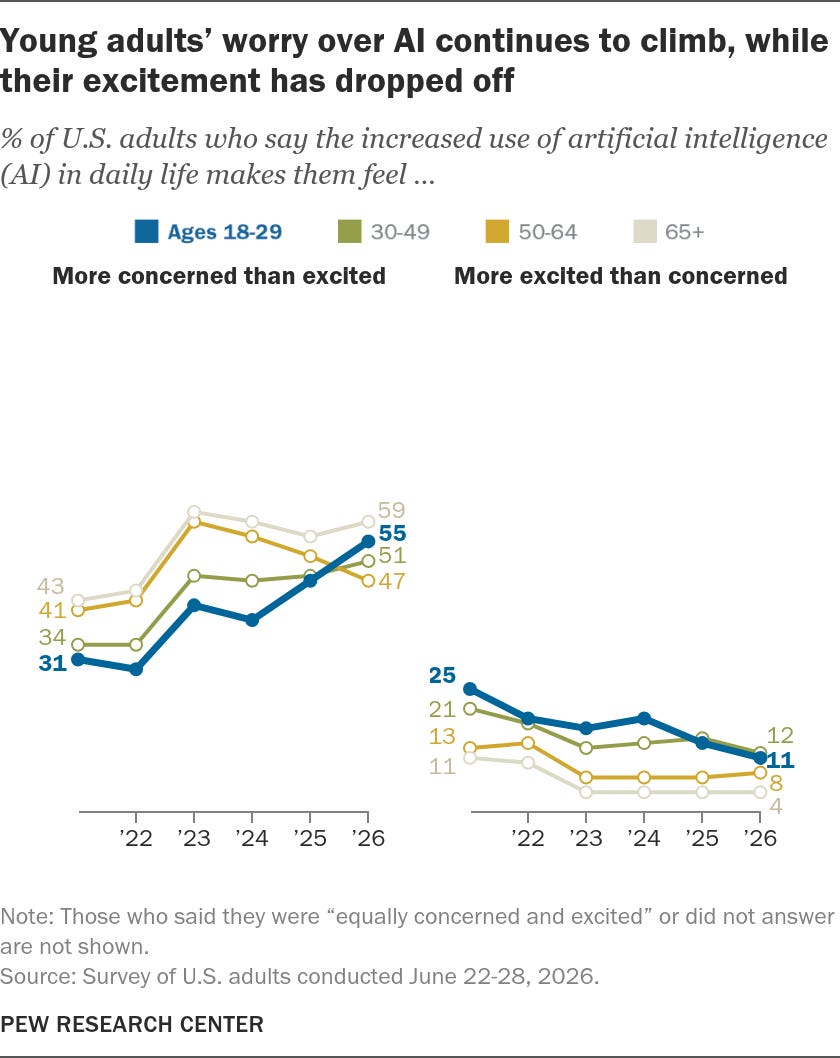
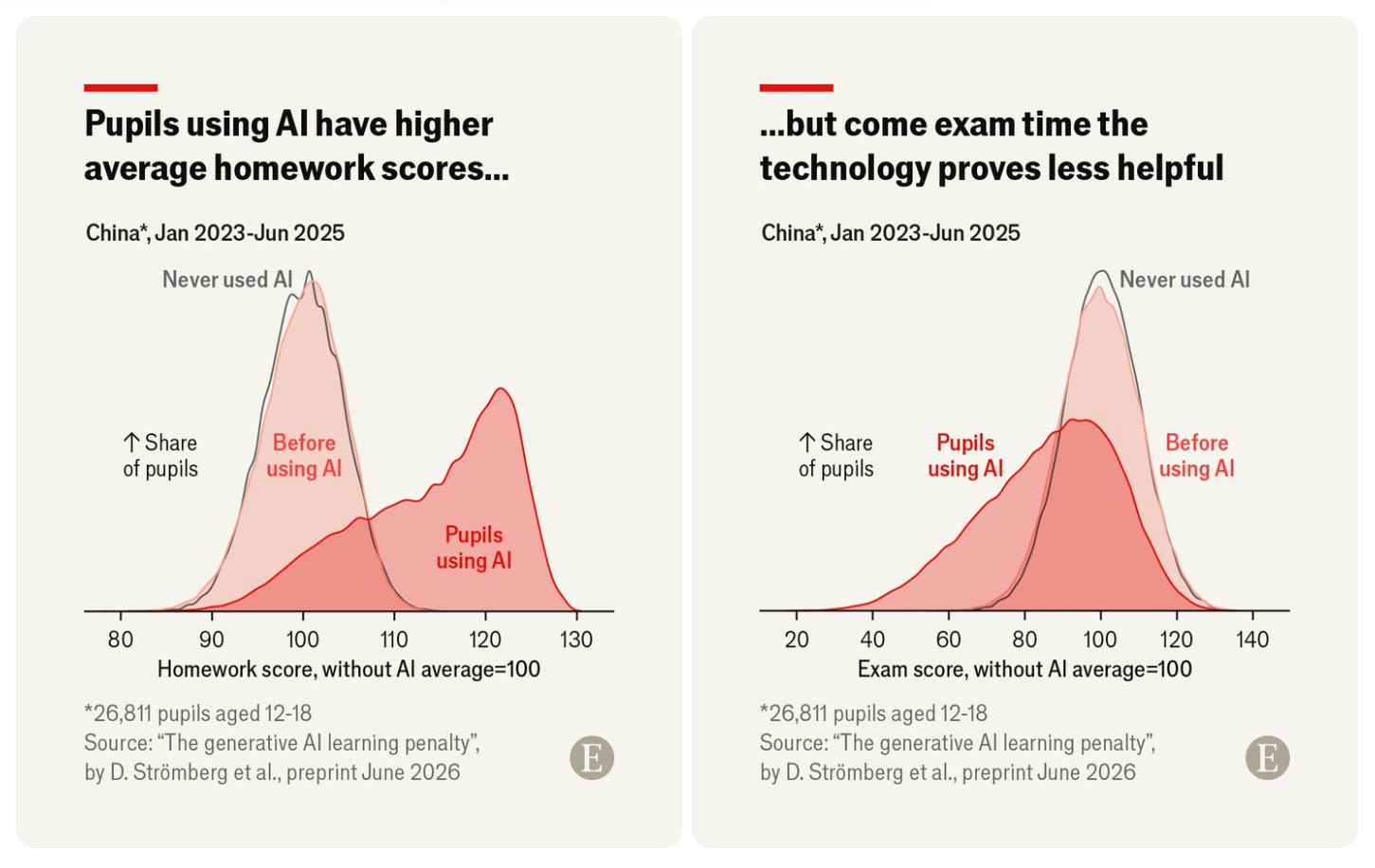
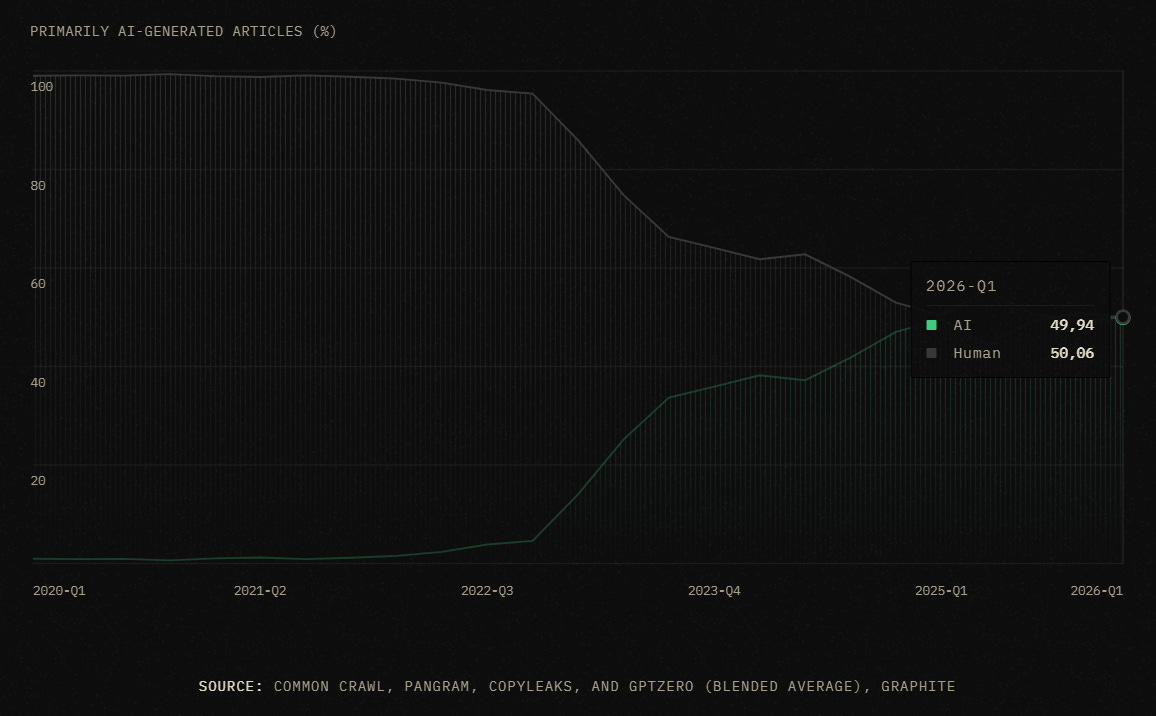
This all might be anecdotal, and the long-term predictions and projections might swear AI is good for the world, but so what? They’re asking us normal people to concede our street shit in exchange for their stat sheets, our concrete lives with true stories in exchange for their abstract utopia—welcome it’d be if you can show it to me! But you can’t, and so you’re not just failing your words, but also your world.
The world they imagined is not happening as they pictured it, but as we feared. They took everything they wanted from us to improve the world and, in our eyes, have nothing to show for it. Are we dumb for not trusting that they will turn it around? Or is it them who are dumb for assuming we’d keep trusting them forever?
There’s a lot in here, Alberto. You’re channeling passionate and valid concerns about our planet. I too am heartbroken about humanity’s greed and myopia that’s burning up your country and ravaging the West Coast of the US where I live.
At the same time, I think it’s a slippery slope to bundle up all these issues and pin them on the collective AI boogeyman. There are a few important distinctions to tease out here:
1) NIBY-ism is not specific to AI. In fact, its roots in American society are deep and cultural. As someone born and raised in Europe, it took me decades of living in different states and cities in the US to understand the phenomenon. The AI bosses don’t want data centers in their Los Altos back yards. But that’s just the last in a string of NIMBY issues that span any and all development - from industrial to public housing. The patchwork of laws and regulations span city, county and state and are really hard to navigate for anyone on a crusade to build anything other than mansions in wealthy areas. You also have to understand that unlike in Europe, most retirees in the US don’t have government pensions or welfare benefits. Most of their wealth is tied to the value of their homes, so letting that value go down by allowing any adverse development in the zip code is an issue of survival for most middle and upper class households. It’s unfortunate but it is what it is.
2) Politics in the US has lost all connection to reality in recent years. You can’t tell anything meaningful from what Abbot or any politician says. If tomorrow the popular sentiment starts blowing in a different direction or Trump tells them to perpetuate a lie, they’ll stand up and say the exact opposite from what they said yesterday. It’s opportunistic to the core. The same with tech companies that seamlessly switch from building AI tech to offering anti-AI features (powered by AI of course) without batting an eye. They will be pro AI or anti AI depending on what makes them the most money. Don’t take their stance as evidence of anything else.
3) The data center issue is mostly a state issue in the US. The economics and attractiveness of data centers are very different for a wealthy state like California versus an impoverished state like Mississippi and others in the Bible Belt. I know it sound crazy to European ears, but that’s how a lot of things like healthcare and education policies are decided - on the state level. It’s almost like you have different countries and vastly different economies. The cost benefit math on data centers will be different too. In her podcast interview with Ezra Klein of the NYT, Jasmine Sun shared that she had spoken to a few of the local people hired to build and operate those data centers and found that the income from the 5-10 year project will be life changing for most of them, allowing them to buy homes and raise families in states and communities where the next best alternative for them would have been either crime, drugs or a hand-to-mouth existence on a minimal hourly wage. I think that’s an actual measurable benefit.
4) The true reason behind the data center opposition in the US is not the environmental cost. In fact, Jasmine Sun in the same Ezra Klein podcast interview shared that the environmental costs of data centers are not meaningfully different than the costs of other factories or beef farms. In fact a lot of times they’re actually lower. There is a quote by her that I mention in my essay from last Friday that says the real issue is the lack of trust. Most people have not used AI and have let the increasingly polarizing media coverage of AI (contributed to in large part by the tech CEOs as well) to shape their opinion of AI as harmful and useless. In fact, AI has become this warped boogeyman phenomenon that is highly emotionally charged and fear-driven but few people have taken the trouble to understand the technology first hand.
And the last point is where I would caution you to moderate the fanning of the flames of fear. I know it emotionally-charged content gets engagement online. But I believe that those of us lucky to have a platform and an audience also have the responsibility to be thoughtful and measured when it comes to educating people about things we’ve taken the time to research and understand.
Reframing datacentres against almond or cannabis farming is more effective.
IIRC Training llama3 used the same energy as 90 minutes of legal cannabis cultivation in USA. (and I guess a minute or two of water use if that)