


Hey, Alberto here! 👋 I publish long-form AI analysis covering culture, philosophy, and business. Paid subscribers get Monday how-to guides and Friday news commentary (back soon). If you’d like to become a paid sub, here’s a button for that:
Anthropic might be screwed.

The AI industry loves to defy nature—like when they go and try to build an artificial God—and they often get their way—like when they convinced the US government to splatter America with a bunch of ugly, noisy buildings in what were otherwise beautiful landscapes—but there’s one battle the industry will always, inevitably, lose: nature can’t stand exponentials.
This is a fact of life: I grew twice my size in the first year after being born and then doubled again by 6 or 7 and now I’m biologically stuck at ~180 cm. But I’m Spanish and I know for a fact that things work differently in California. The Silicon Valley hivemind—I’m not talking about agents—has developed a mild exponentiality disorder: the number of transistors inside chips, GDP, AI benchmark scores, the size of the models, intelligence, and the amount of attention they can steal from us before we rise up in arms—all those things are expected to point northeast indefinitely.
Exponentials are, to them, like morning caffeine and weird parties—a constant.
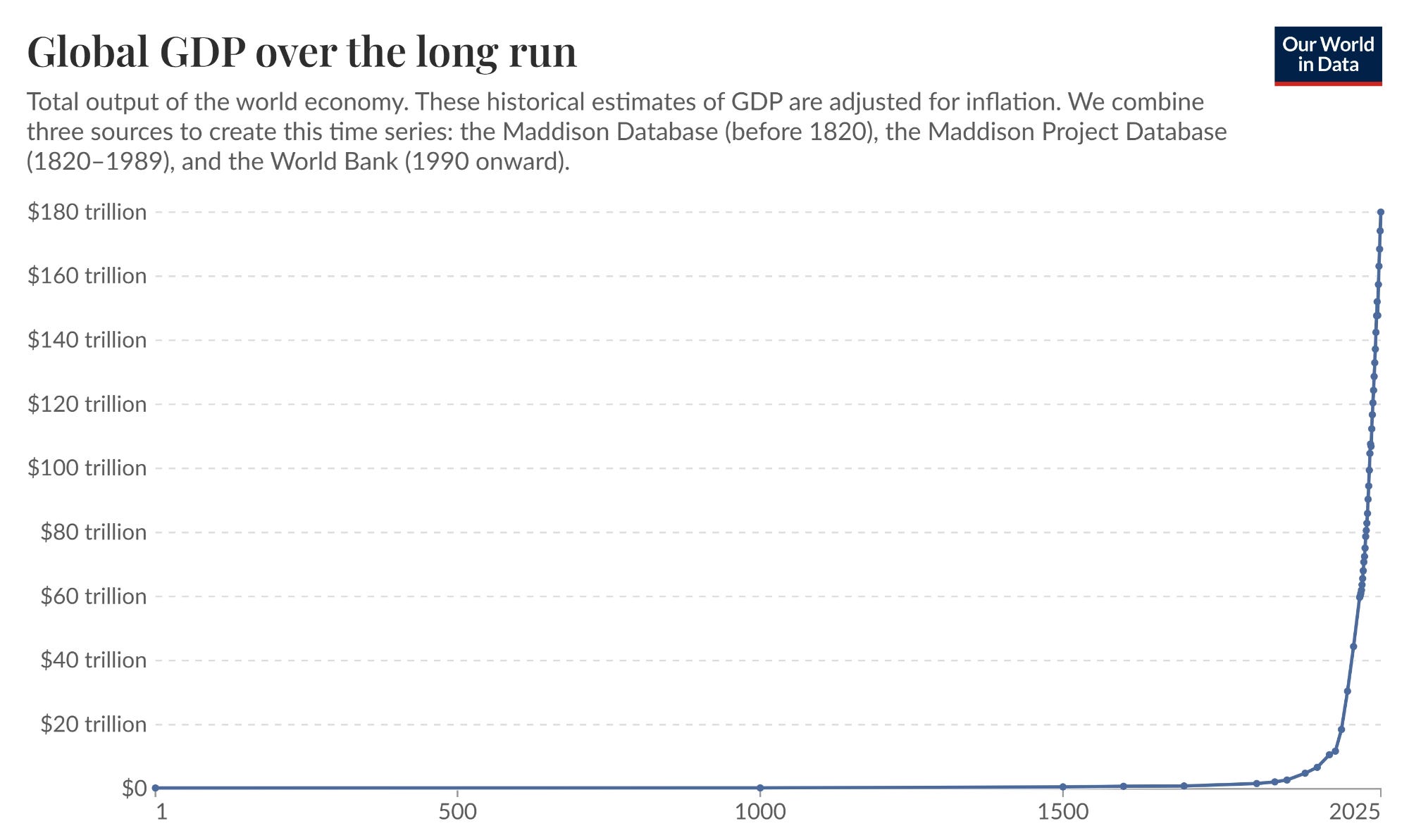
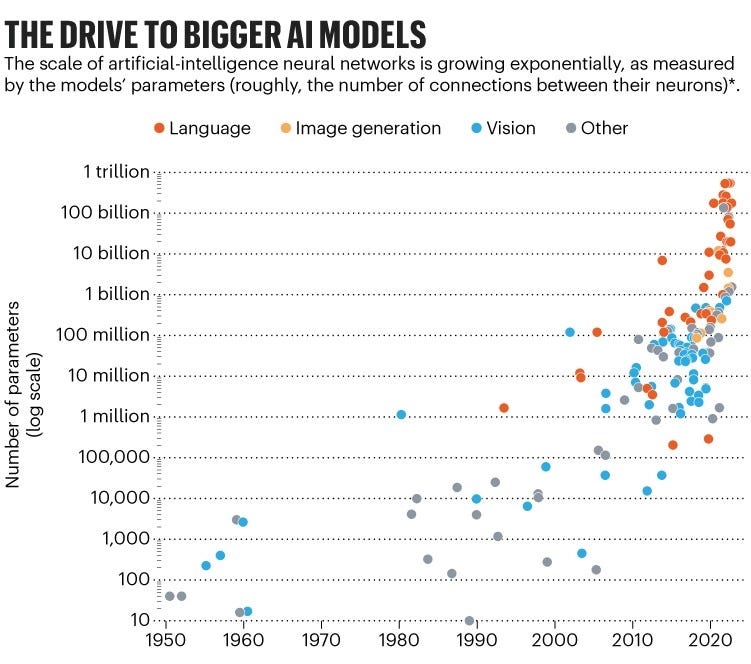
So far, they seem to be correct. Nature, however, does not tolerate insurrection (that’s why the sun sets in San Francisco).
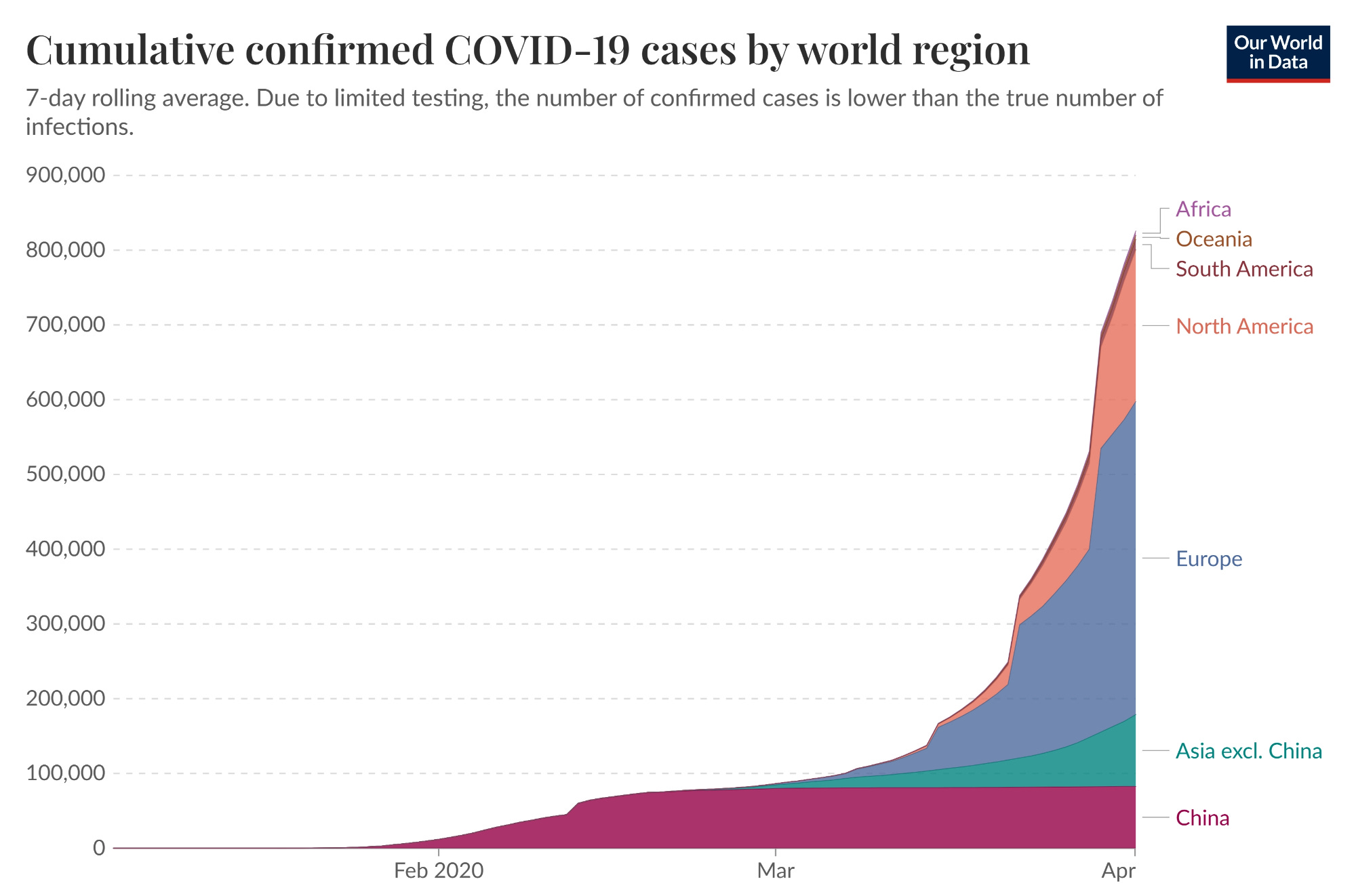
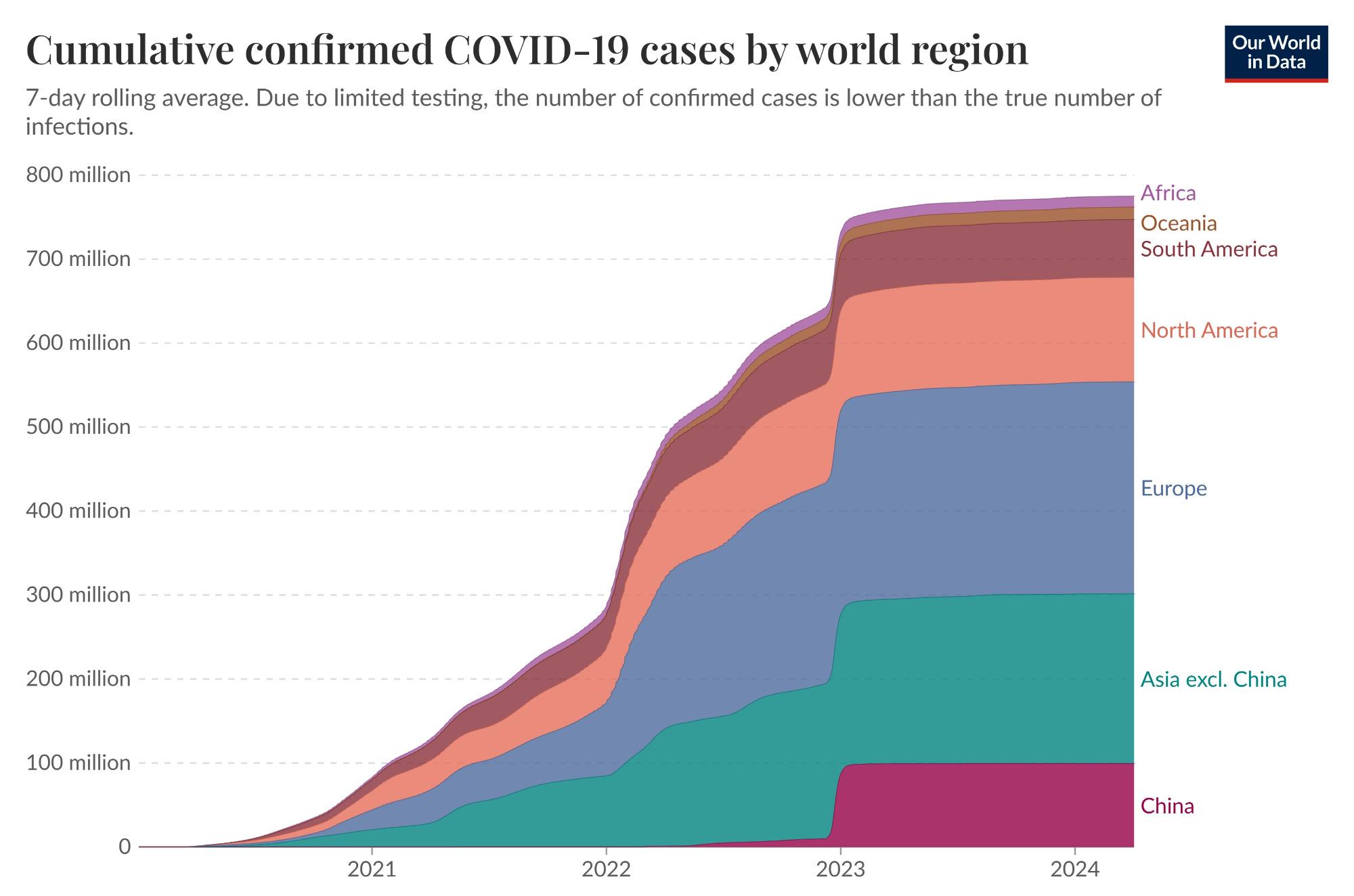
An exponential can last for a while—see, COVID—but it always, eventually, finds a binding constraint. In the case of COVID, there are only so many people a virus can infect (see also, Pluribus). For human population, we used to think food was the limiting factor but turns out screens are. In the extreme scenario—beyond Bay Area delirium and microorganisms—one always encounters a finite observable universe.
The cosmos imposes a rather annoying upper bound on how fast things can grow.
To give you a sense of how rapidly exponentials exhaust, take a chessboard. If you put one grain of sand in the corner and then double the number for each consecutive square, by the time you reach the opposite corner, you have stripped every beach on Earth of sand for your stupid little game.

But then, with all the sand gone, how will the industry manufacture any more silicon wafers for their chips?
Wrong question! Some exponentials manage to avoid their fate for longer than usual. It was Gordon Moore, Intel co-founder—although probably better known for the law named after him—who said that although “no exponential is forever,” forever can be delayed.
Moore’s law has lately found itself dealing with quantum tunneling and all sorts of magical properties of atom-sized particles but before that, it had an impressive run of five decades of doubling the number of transistors in a chip every ~two years.
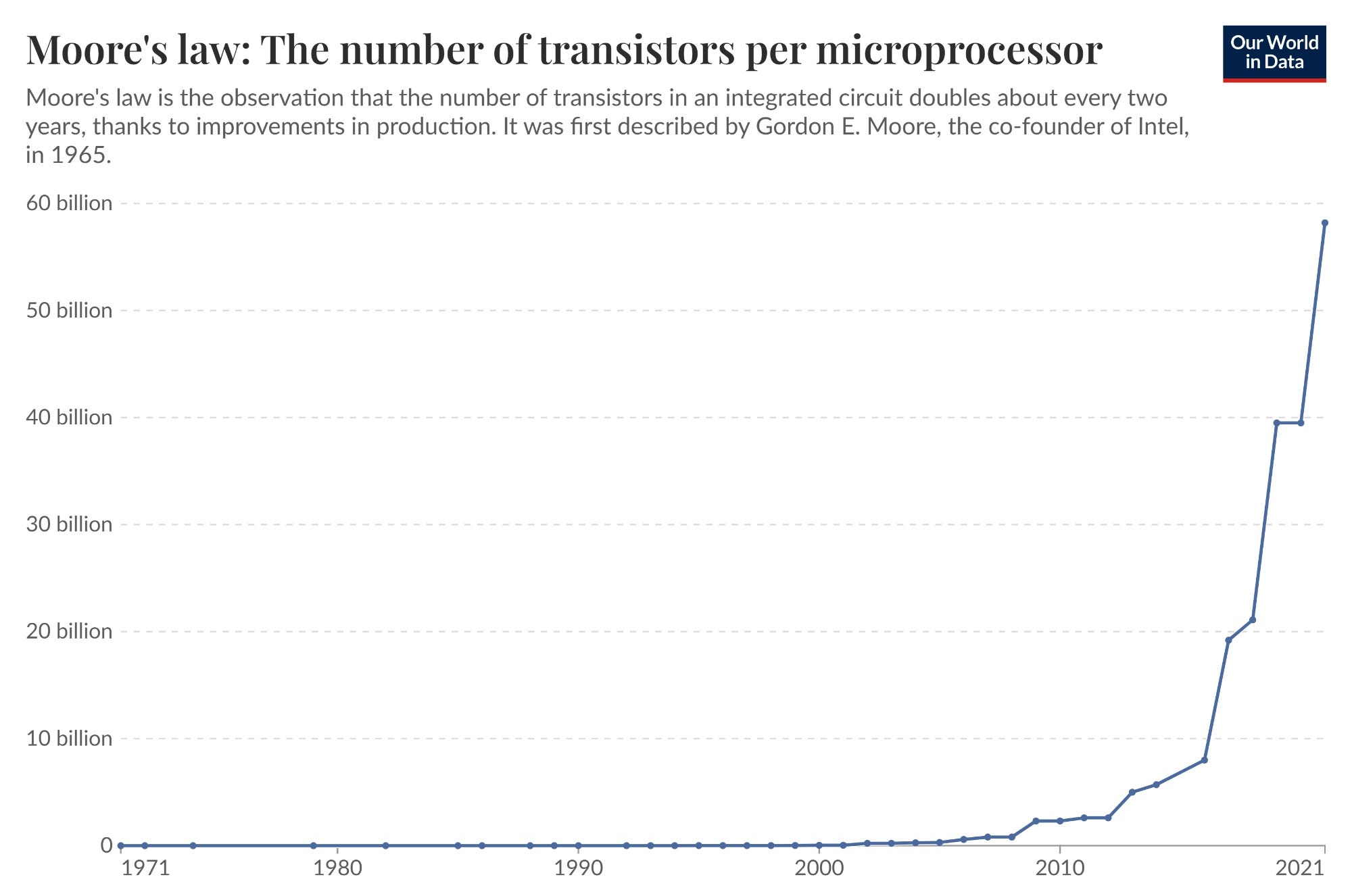
The problem is that it only takes some finite amount of time to turn a prideful exponential into a disappointing sigmoid. Here’s what a sigmoid looks like, for illustration purposes (courtesy of mathematics):
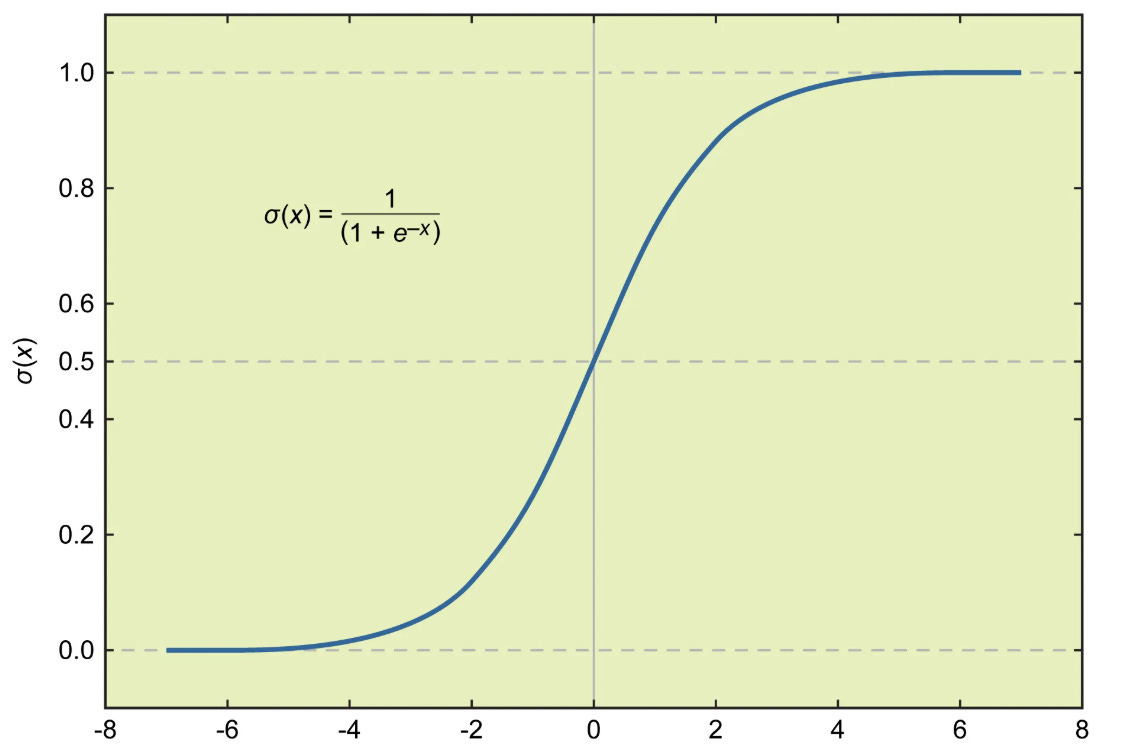
A plateau is better than a downward slope, sure, but it’s not sufficient for the singularity. This is the main mathematical objection against the naive version of the AI industry’s preferred thesis: every vertical line eventually discovers it’s just early.
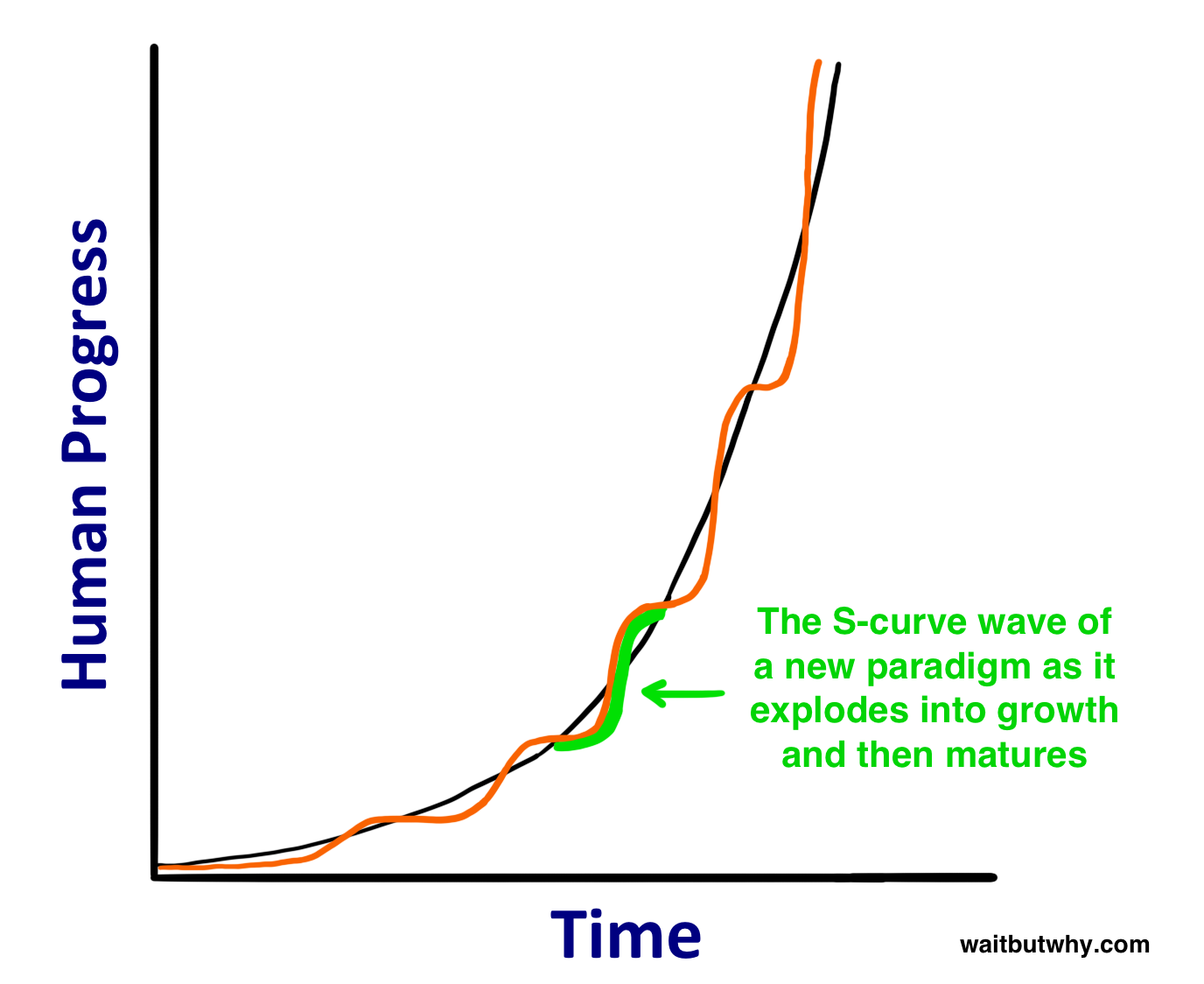
“Wait,” says the AI industry learning of this unwarranted pessimism, “what if we stack a bunch of exponentials-turned-sigmoids on top of one another? Instead of adding increasingly more transistors to a chip why don’t we also increase, say, their individual performance! And the size! That would transform a bunch of S-shaped curves put together into one big exponential again!” They are correct:
So clever.
A sigmoid that begins when another ends creates, if you zoom out, the perception of true exponentiality. Silicon Valley has used this argument for years to dismiss mathematical skepticism. In theory, it works: technology doesn’t grow one thing at a time but different variables influence one another, creating much more powerful growth mechanisms. The population explosion, for instance, wasn’t caused by exponentially more food alone, but by mutually reinforcing improvements in yields, sanitation, medicine, and energy availability. The same applies to chips and AI models.
Unfortunately, the exponentialists fail to realize that a stack of sigmoids on top of one another, insofar as it can truly resemble an exponential, also obeys the laws of physics and is in turn doomed to also become, ultimately, a sigmoid. Unless you have an effectively inexhaustible supply of new S-curves—you don’t—your efforts to deceive nature are in vain. Sigmoids can be delayed for a while but, like the grim reaper, Gaia eventually catches up.
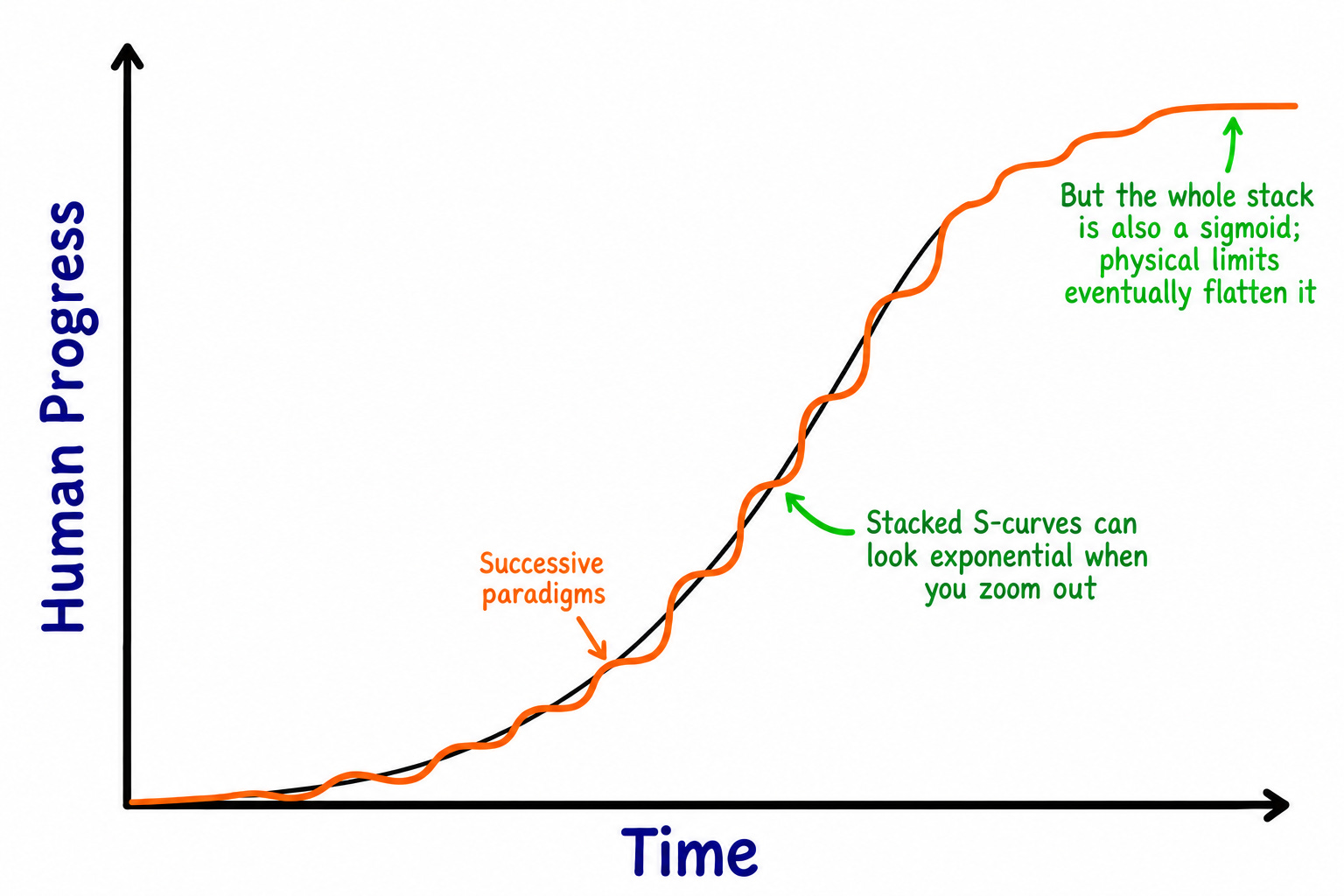
This might be a contentious assertion so I will say, admitedly, that stacking S-curves can approximate an exponential for a long time, enough to outlast humanity (in that case, the binding constraint would be, sadly, our extinction). But that’s tangential to my point, which is this: Silicon Valley’s love of the indefinite exponential growth is contra naturam.
My point is not that all exponentials die fast but that they eventually die. Period. And so we shouldn’t be surprised when it happens.
It follows, naturally, that not all exponentials fold to reality equally easily. Some are stubborn and turn into sigmoids slowly, like Moore predicted of chips, others survive by escaping into subsequent S-curves, like AI model performance (size, data quality, better chips, inference-time compute, etc. all collaborate). And yet others quickly fall before the laws of common sense due to factors as mundane as a presumptuous forecast.
Having now definitively settled a debate that has occupied computer scientists and philosophers for decades, we can move on.
Apropos of nothing, let’s take a look at Anthropic’s revenue growth.
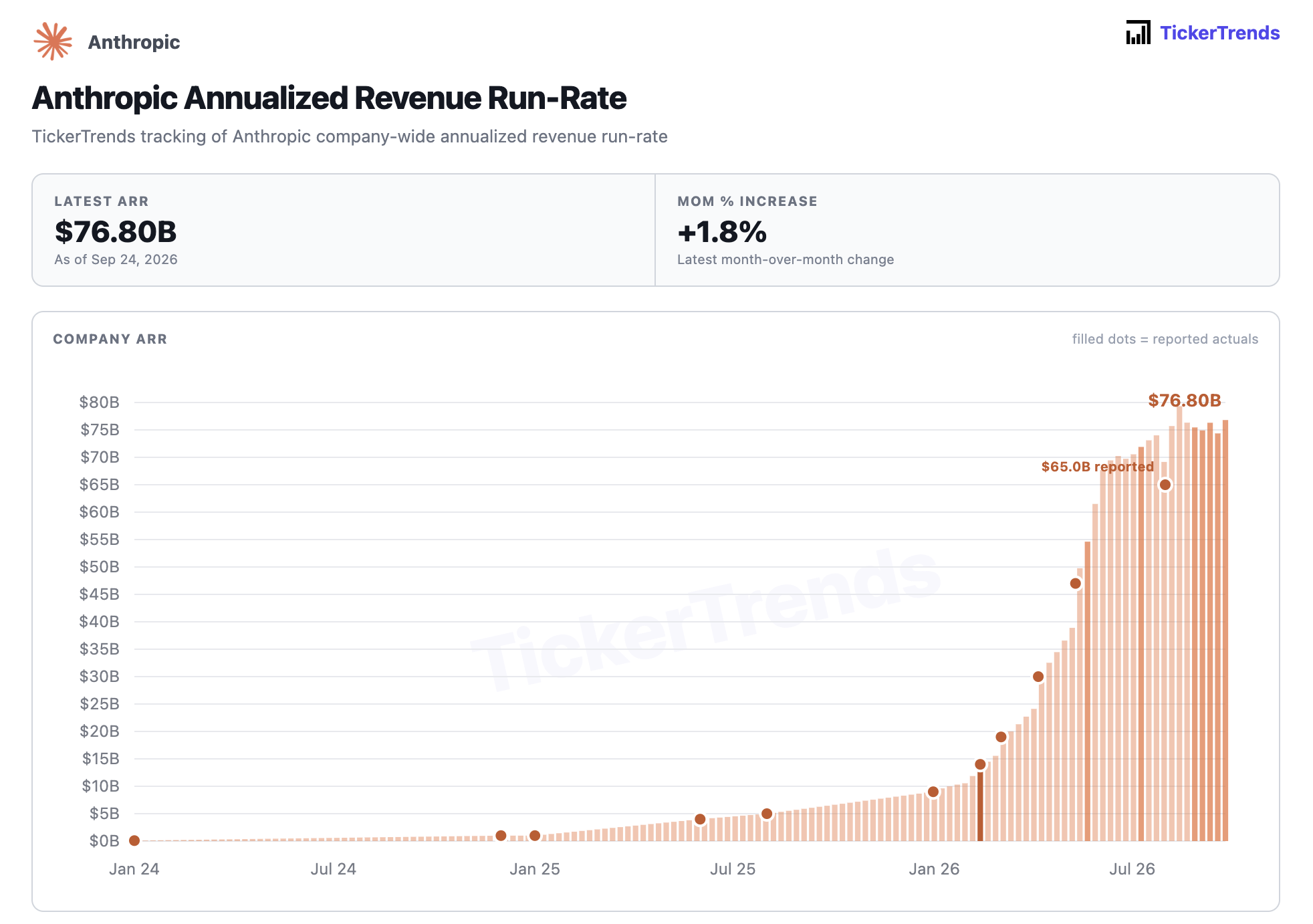
Here it is with the trendline drawn on top:
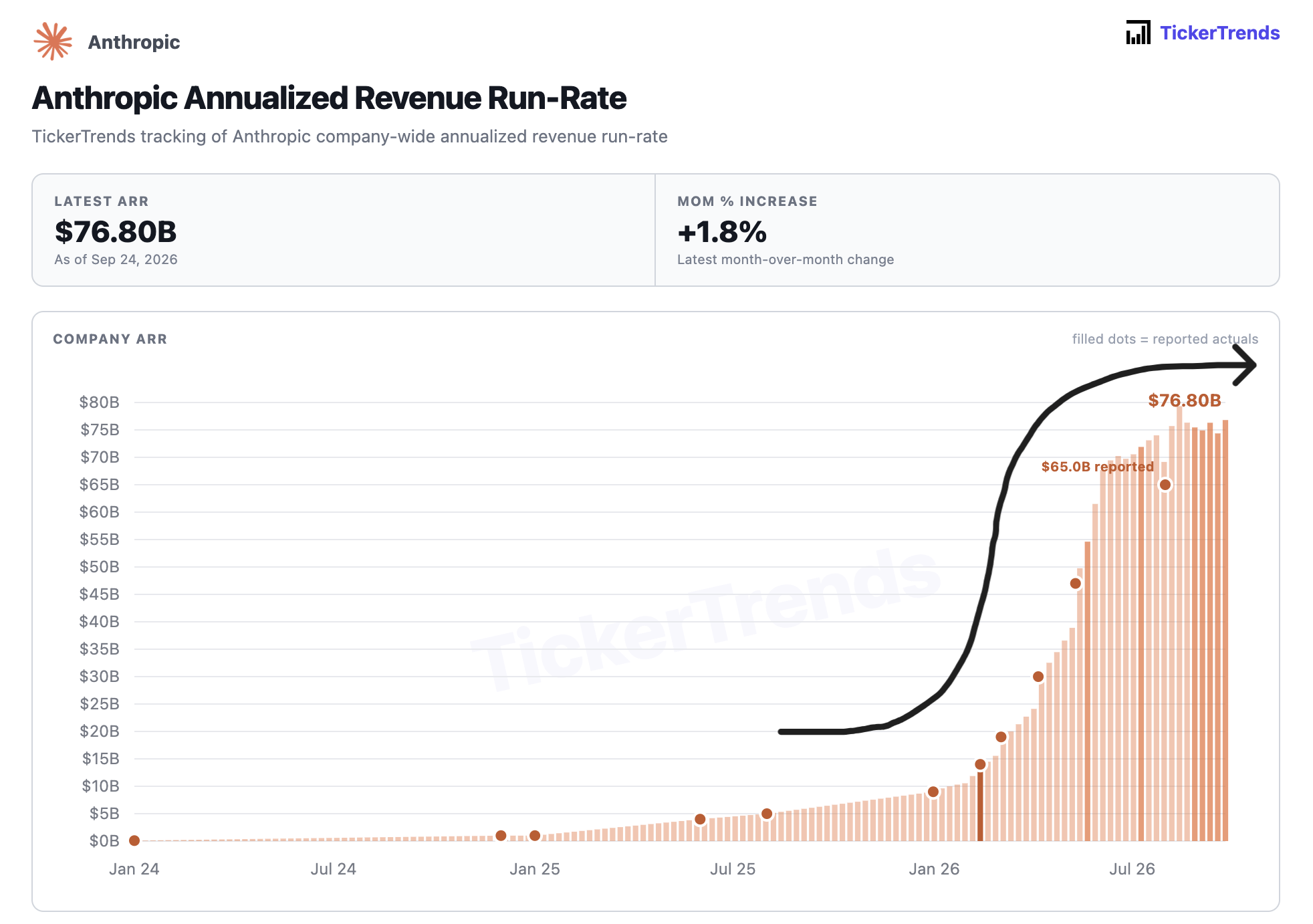
Uh oh!
I could end this article here. My job is done. Sell the S&P 500 index fund in your 401(k) and go home with your kids. I’m kidding, I would never give financial advice when the bubble is about to pop. Only God knows what comes next, although you can try asking Claude.
What I will do, however, is examine the possible explanations to a simpler question:
What the hell is happening to Anthropic?