


Hey, Alberto here! 👋 Each week, I publish long-form AI analysis covering culture, philosophy, and business. Paid subscribers get Monday how-to guides and Friday news commentary. If you’d like to become a paid subscriber, here’s a button for that:
Today: not an essayistic guide, not a guiding essay, but something else.

I have ~700 half-written essays in my drafts folder. I have one about the archetypes of the AI user, where I crafted an itemized test to make it interactive, but it got too complicated, and I let it go. I have one with a clever headline—“A Rising Tide Lifts All Bots”—but it’s hard to find a story that satisfactorily fulfills the promise. I have some fiction attempts with titles like “The Impossible Seascape,” “Godless Confessions,” and “Every Friday Buries a Thursday,” but my enthusiasm fades away when I remember that I can’t write fiction. I used to think of my drafts folder as a sacred place where I guarded cash-making thoughts. Now I see it for what it is: a cemetery.
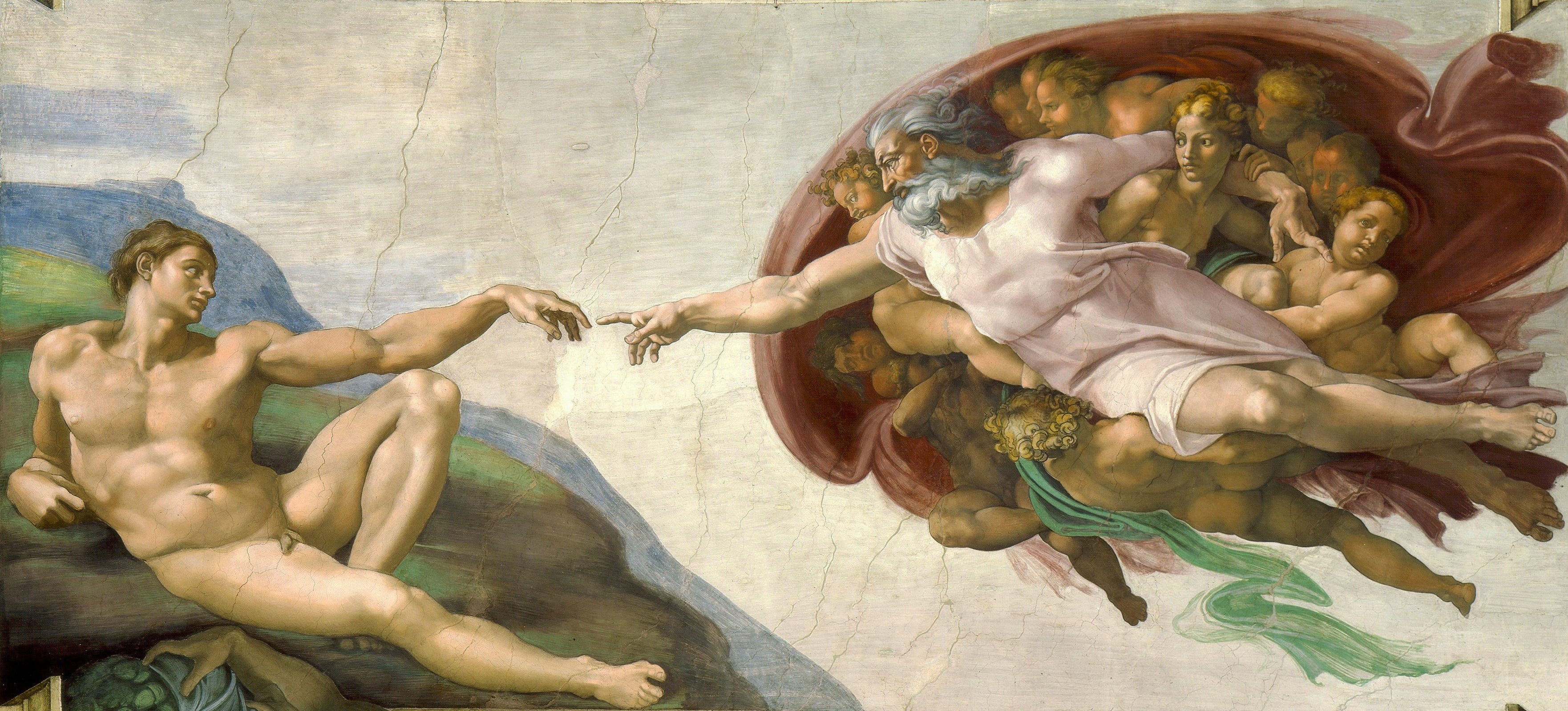
Life has this internal joke by which it endows us with the far-sighted eyes of a predator and, at the same time, curses us with three-foot arms. What can you do with that? Nothing, just see how every bird, like the sun, remains untouchable. The same thing happens with projects to be pursued and essays to be written. Why, if not, have all languages invented some variation of this proverb: “A bird in the hand is worth two in the bush.” Most of what you could do will simply not happen because your grasp is short. That’s no problem, though, because a short grasp keeps your aspirations intact. As Robert Browning wrote: “Ah, but a man’s reach should exceed his grasp, or what’s a heaven for?”
Blogger Venkatesh Rao took Browning’s idea and transposed it into AI. To him, AI is how you close the gap between your short grasp and your long reach. It might kill your ambition but only by manifesting it into action. With AI, Rao has a hold on his own personal heaven:
Routinely reaching well beyond my native creative aptitudes is a heady feeling. Apparently, I’ve always-already been an artist/programmer/roboticist etc. It’s just that previously you had to be some sort of full-stack genius-god on the aptitudes front to express such a personality.
Now you can just invoke a full-stack-genius-god jinn to complete your natural personality for $20/month.
It’s genuinely hard, depressing, and boring to think of myself as primarily a writer now. With AI prosthetics, my natural dilettante tendencies are finding pathways for expression that simply didn’t exist before, and it is becoming clear that temperamentally, I tend towards a breadth that demands full-stack depth for realization.
This train of thought inspired a bon mot recently — a man’s reach should exceed his grasp, else what’s vibecoding for?
But we can go further than Rao. By virtue of its versatility and its predisposition to enhance any of your abandoned passions, AI can extend your grasp well beyond your reach. We’re no longer in Browning’s heaven but past it. Your ambition is now overshadowed by your actual options. AI doesn’t fix dilettantism but extends a lifeline. Michael Polanyi said that “You know more than you can tell,” and now, thanks to AI, “You do more than you can know.”
The corollary to this opportunity is that there’s no excuse not to visit that cemetery. It’s lazy to allow a machine to do your work for you, but it’s not lazy to reduce the initial friction. Leave your core work intact—in my case, I don’t let Claude actually write the essay—but expand your grasp beyond your reach elsewhere using AI as a sort of prosthetic superpower; let your unique well of talent become the Mariana trench of a one-inch-deep ocean. AI allows you to be both a specialist and a generalist at once and that can be as good a gift as heaven.
In practice, however, AI has important flaws that caveat its grasp-lengthening nature: it’s not that you should avoid using it for your core work but that you can’t. Terence Tao, one of the world’s best mathematicians, explains it best in his latest appearance on the Dwarkesh podcast. He shared an insight that radically changed my mentality on how to use AI:
I’m definitely noticing that the style in which I do mathematics is changing quite a bit, and the type of things I do. For example, my papers now have a lot more code, a lot more pictures, because it’s so easy to generate these things now. Some plot which would have taken me hours to do, now I can do in minutes. But in the past, I just wouldn’t have put the plot in my paper in the first place . . .
The core of what I do, actually solving the most difficult part of a math problem, hasn’t changed too much. I still use pen and paper for that . . .
If I were to write a paper I wrote in 2020 again—and not add all these extra features, but just have something of the same level of functionality—it actually hasn’t saved that much time, to be honest. It’s made the papers richer and broader, but not necessarily deeper.
Tao is not as optimistic about AI as Rao, but I actually prefer that because the takeaway is more believable: AI doesn’t make Tao’s work better or deeper but broader. His grasp is increased significantly but that doesn’t mean he can do anything and everything. He’s not more productive at the core tasks—the ones that need his judgment, his intuition, years of accumulated knowledge—because AI can’t help him there. He’s more productive at things he would otherwise simply not do. Tao is now a man whose grasp extends to things his reach never bothered to include.
Back in my cemetery, I can do the same thing: “Hey Claude, look at this pile of slop in my drafts folder and find me something worth developing further. I want a topic that’s timely (search the news) and timeless (read Homer) at the same time. Suggest three titles, three angles, and an outline for each.” And then I will do my core task—writing and editing—and publish it with a title like “How to Use AI to Make You Better at the Right Things.”
Notice that I never said that AI’s inability to help Tao is related to the difficulty of his work. The reason is, instead, about what “core work” means, for both Tao and you. Core work is, by definition, the part that requires your specific judgment, taste, and accumulated knowledge, and other things. In short, your circumstance.
All knowledge workers have a core work that AI just can’t touch; no amount of context is enough to nail every detail. AI is intrinsically auxiliary because it can’t get inside your brain; it improves your performance but it hardly improves your competence. Here’s a secret. Knowledge work has an invisible protective layer against AI: all of it—every level of complexity, every profession, every skill tier—is inherently relational because, at the very least, it is in relationship with you. That’s why most people are getting more productive at the periphery and exactly as productive at the core.
If you try to push AI down the Mariana trench of your skill and knowledge, you’re failing hard at the question of “where can AI help you the most?” Once you’re good at something, it just won’t help you there over the long run. It can do amazing things but for you to improve, you need to understand them yourself. There are no shortcuts to being better. And yet, all the adjacent things you wanted to do but didn’t have time or energy for are now low-hanging fruit. Don’t insist on using AI to make you better at the wrong things. Just let it increase your grasp, as your reach remains forever human.
To finish, let me give you some quick tips that I use in my own practice to apply these ideas in a way that’s coherent with the framework.
