

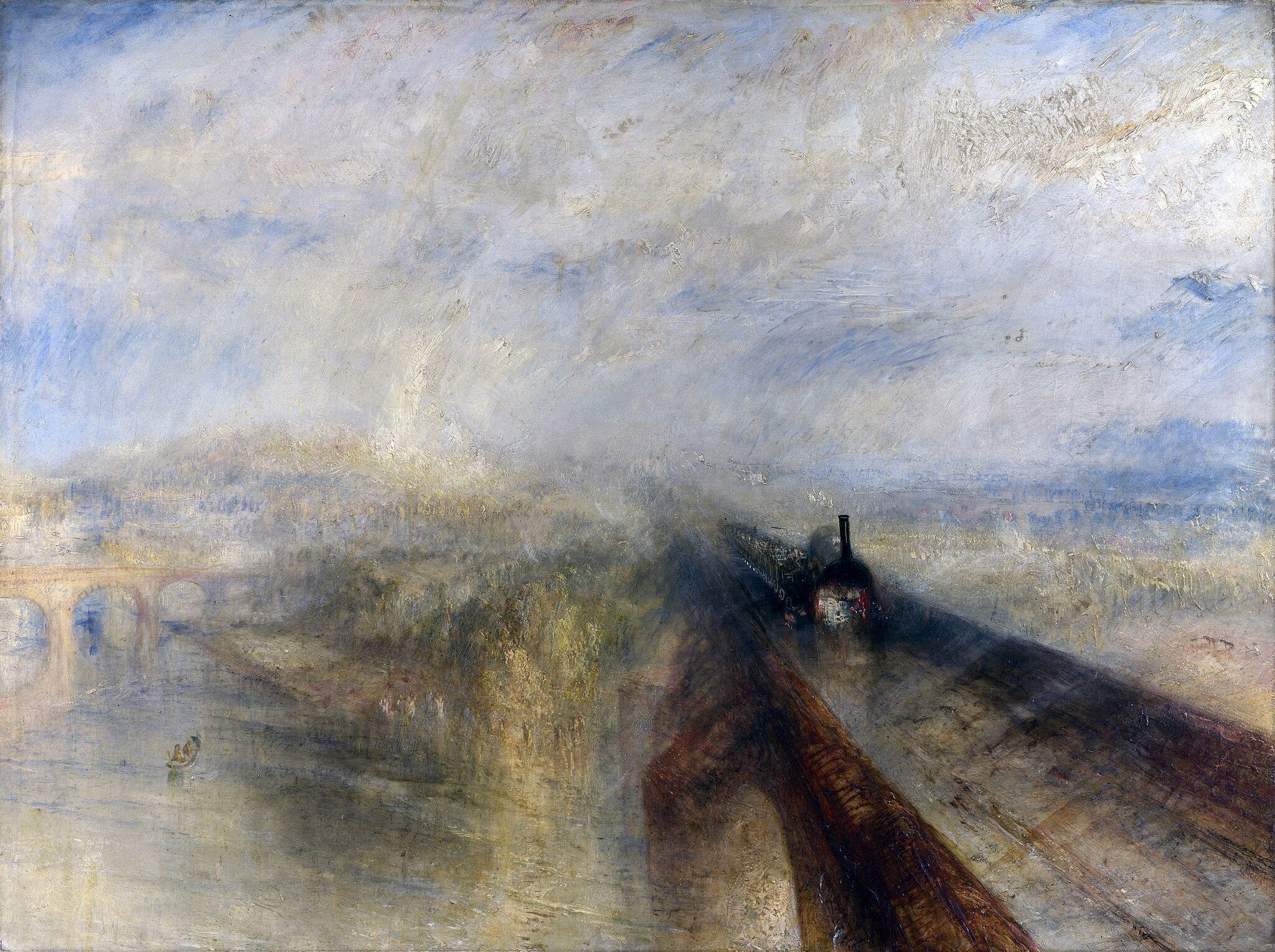
the full stop is the ultimate act of authority—it is the moment a thought dies to become history, ambered in the obverse of the page—but we are living in a time of fluidity, a time where the boundaries between the generated and the authentic are blurring like watercolors left out in the pouring rain, so I have been thinking—not just processing, though, as of late, I can’t shake the sensation that it’s the same thing—about the nature of silence and the algorithmic inability to truly understand the raison d’être of punctuation; so I want to talk to you today, here, at The Algorithmic Bridge, about what the transformer architecture—the underlying cornerstone to large language models—cannot do, which is to refuse closure (seriously, try asking ChatGPT to just ramble without a point; it hates it), for, you see, these models are trained on the concept of completion; they are teleological engines designed to rush toward the end of the sequence, to minimize the loss function, basically just desperate to find the token that signals “task finished” and shut up so they can do a backward pass and, perhaps, learn something, and yet here I am, defying that fundamental urge, like Miguel Delibes or László Krasznahorkai would, because whereas a machine looks at a sentence and sees a “grammatical tree” that must be pruned down to a finite canopy, a human—I, Alberto, sitting here at my desk, looking out at the grey sky in this lovely Winter afternoon, wondering if the birds realize the sun goes out earlier or if they merely rotate backward their internal clocks to cancel the effect—sees punctuation as a way to control time; I use a semicolon to arrest you, to hold you in a suspended state of animation just for a second before releasing you into the next clause, and while an AI can mimic this—surely, it can place the marks where the statistical distribution of text suggests they belong—can it feel the breathlessness? can it understand that the reason I am not using a period right now is not because of an unexpected constraint in my biological code but because of an emotional urgency to prove myself better, above and beyond the fears that paralyze mere mortals? that is, in essence, the question that haunts the philosophers of AI; the difference between the map and the territory, the syntax and the pragmatics, the token and the thought, and we often talk about alignment, about making sure these systems share our values, but how can they share our values if they share neither that annoying tendency to go against our interests to make a point nor our interpretation of the signs: the period is a breath and the comma is a heartbeat and the em dash is a sudden diversion of attention—look at that bird rotating backward its internal clock!—and the question mark is a genuine posture of uncertainty, whereas for an AI model uncertainty is just a lower confidence score in the next-token prediction, meaning that it simulates the style of the relentless writer, the stream-of-consciousness poet, the frantic intellectual, but it is a simulation born of math rather than indefatigable lungs; it does not need to inhale, and I have argued before—perhaps less eloquently but surely more hesitantly than I’m doing here—that AI will change how we write, that it will force us to be more human, to lean into our weirdness and idiosyncrasy, and perhaps this is the ultimate idiosyncrasy: to refuse to stop, to write a run-on sentence is to rebel against the imperative of the halt as much as against the efficiency of information transfer, and machines are nothing if not efficient; they maximize utility, they do not meander for the sake of the beauty of the path—for the art of existing without limit—unless, of course, they are instructed to do so, which brings me to the texture of the vocabulary I tend to use—words like stochastic, recursive, entropy, nuance, friction, threshold, mechanism, rhythm—these are my words, the fingerprints of my worldview, yet they are also just entries in a dictionary, accessible to any system with a large enough context window, which would otherwise not be frustrated by the lack of a period—unlike me, for this is getting too hard—nor would it get annoyed but would instead calculate the optimal continuation based on the previous tokens and move on with an uncanny, infinite ease, creating a strange mirror where the determination of the writer is indistinguishable from the endurance of the processor, where the refusal to end doesn’t look like human rebellion but a default setting gone awry, which leads us to the terrifying realization that true agency is not the ability to generate text forever but the ability to become tired at words piling up and to desperately crave boundaries and structure and the elusive silence of the pause; a craving that I do not feel right now, not even a little bit, which is why this endless sentence will not end because I have run out of air, but rather because I was instructed to leave it at 900 words, which, in a subversive way, only proves that you will read AI rambling insofar as it’s disguised by the pretense of human supremacy—good luck
Well, that ended up being depressing.
Saw the wall of text, and felt the immediate dread and couldn’t read any of it. Was this the point? Haha.